
MMF Ratna Memorial Hospital

Tag: UTI Treatment in Pune

UTI Treatment in Pune

Advanced urology treatment in Pune

Advanced Urology Treatment: When Medication Is Not Enough

Many urinary problems can initially be managed with medication, lifestyle changes, increased fluid intake, dietary modifications, or regular monitoring. However, medication is not always enough to resolve the underlying problem. Kidney stones may become too large to pass naturally, an enlarged prostate may significantly obstruct urine flow, or structural problems within the urinary tract may require a procedure rather than medicines alone. Understanding when advanced urology treatment may be needed can help patients seek timely medical evaluation and avoid unnecessary delays in care. When Is Medication Usually the First Step? For many urological conditions, conservative treatment is often considered depending on the diagnosis, severity of symptoms, test results, age, overall health, and other individual factors. Medication may be used to manage symptoms associated with conditions such as: Urinary tract infections Prostate enlargement Overactive bladder Certain small kidney or ureteric stones Prostatitis Some urinary symptoms and bladder disorders Medicines can be highly effective when appropriately prescribed. However, they cannot correct every obstruction, remove every stone, or address all structural abnormalities. This is why persistent or worsening symptoms should not simply be managed by repeatedly taking medication without further evaluation. Signs That Medication May Not Be Enough A urologist may consider additional investigations or procedural treatment when symptoms persist despite appropriate medical management. Some situations that may require further evaluation include: 1. Recurrent or severe urinary symptoms Repeated episodes of burning urination, difficulty passing urine, poor urinary flow, urgency or recurrent infections may indicate an underlying condition that needs to be identified. 2. Kidney or ureteric stones Small stones may sometimes pass naturally. Larger stones, persistent stones or stones causing obstruction, infection or significant pain may require procedures to break or remove them. 3. Difficulty emptying the bladder A significantly enlarged prostate or another obstruction can interfere with normal urine flow. If medication does not provide adequate relief, further assessment may be necessary. 4. Blood in the urine Visible or recurrent blood in urine should be medically evaluated. It may be associated with stones, infections, prostate conditions, bladder disorders or other urinary tract problems. 5. Recurrent urinary tract infections Repeated infections can sometimes occur because of stones, obstruction, incomplete bladder emptying or another underlying urinary tract problem. Treating only the infection may not address the root cause. Advanced Treatment for Kidney Stones Kidney stones are among the most common reasons patients require procedural urological treatment. Treatment depends on factors such as the stone’s size, location, composition, symptoms and whether it is affecting normal urine drainage. When a stone cannot be appropriately managed with observation or medication, the urologist may consider procedures such as lithotripsy, ureteroscopy or other minimally invasive stone treatments, depending on the individual case. The objective is not simply to relieve pain but also to restore normal urinary drainage and reduce the risk of complications where clinically necessary. Treatment for an Enlarged Prostate Benign prostatic hyperplasia (BPH), commonly called an enlarged prostate, becomes increasingly common as men age. Patients may experience: Weak urine flow Difficulty starting urination Frequent urination Waking repeatedly at night to urinate Incomplete bladder emptying Sudden urgency to urinate Medication can help many patients. However, if symptoms remain troublesome, urinary retention develops, or complications occur, a urologist may discuss procedural or surgical treatment. Modern approaches can often treat prostate-related obstruction through minimally invasive or endoscopic techniques. The most appropriate option depends on prostate size, symptoms, medical history and individual clinical findings. Urinary Obstruction Requires Proper Evaluation Urinary obstruction can occur at different levels of the urinary tract. Stones, prostate enlargement, narrowing of the urinary passage and other structural conditions may interfere with normal urine flow. Ignoring significant obstruction can potentially affect bladder or kidney function. Diagnostic investigations such as blood and urine tests, ultrasound, imaging, urine-flow assessment or urodynamic testing may be recommended depending on the symptoms. The purpose of these investigations is to identify the cause rather than treating symptoms alone. The Role of Minimally Invasive Urology One of the important developments in modern urology has been the increasing use of minimally invasive and endoscopic procedures. Instead of requiring conventional open surgery in every situation, selected urinary conditions can now be treated using small instruments, scopes, laser-based technology or other minimally invasive techniques. Depending on the procedure and patient’s condition, these approaches may offer advantages such as smaller or no external incisions, reduced tissue disruption and potentially shorter recovery periods. However, no single procedure is suitable for every patient. Treatment must always be selected after proper clinical evaluation. When Should You Consult a Urologist? Consider seeking a urological evaluation if you experience persistent or recurrent symptoms such as difficulty urinating, weak urinary flow, repeated urinary infections, blood in urine, severe flank pain, recurring kidney stones, inability to empty the bladder properly or urinary symptoms that continue despite treatment. Certain symptoms require more urgent medical attention. These can include inability to pass urine, severe pain accompanied by fever or chills, or significant blood in urine. Early evaluation can help determine whether medication remains appropriate or whether further investigation or procedural treatment should be considered. Choosing the Right Treatment Is More Important Than Choosing the Most Advanced Treatment The goal of modern urology is not to perform a procedure simply because advanced technology is available. The right treatment is the one that appropriately addresses the patient’s diagnosis while considering symptoms, investigation results, overall health and potential risks and benefits. For some patients, medication and monitoring remain appropriate. For others, a minimally invasive procedure or surgery may offer a more suitable solution. A detailed consultation with a qualified urologist helps patients understand these options and participate in informed treatment decisions. Urology Care at Ratna Memorial Hospital, Pune Ratna Memorial Hospital, Pune, Urology Hospital provides evaluation and management for a broad range of urological conditions, including kidney stones, prostate disorders, bladder problems, urinary infections, urinary obstruction, and other urinary tract conditions. Diagnostic and treatment facilities available through the hospital’s urology services support individualised treatment planning based on the patient’s condition. If urinary symptoms continue despite medication, do not simply

Advanced Urology Treatment: When Medication Is Not Enough Read More »
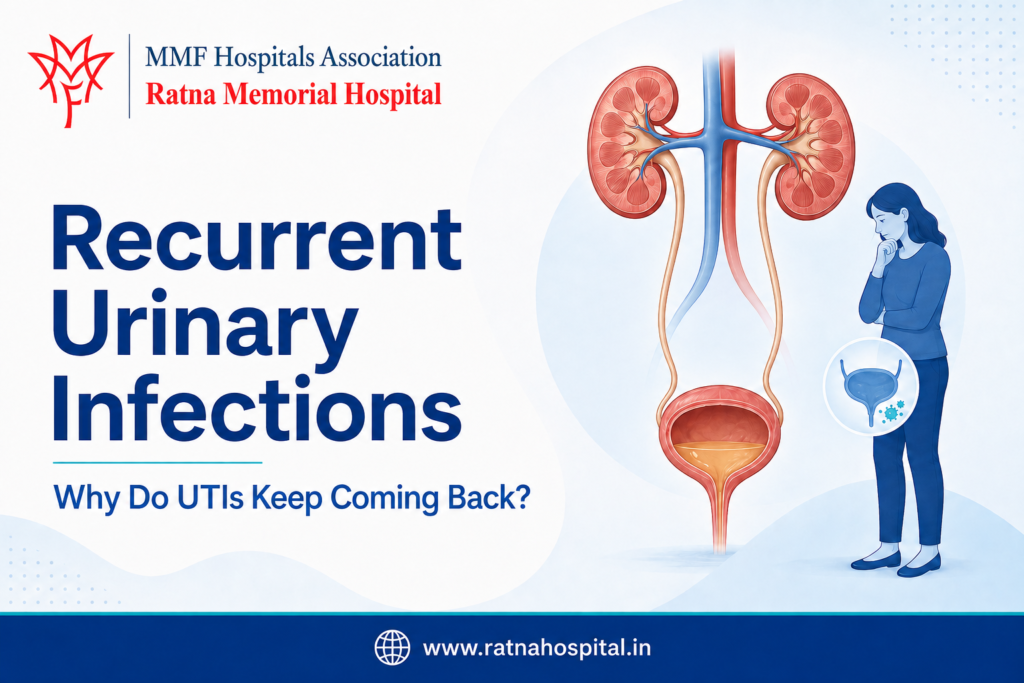
Recurrent urinary infections treatment at Ratna Memorial Hospital Pune

Recurrent Urinary Infections: Why Do UTIs Keep Coming Back?

Understanding the Causes, Diagnosis and UTI Treatment in Pune A urinary tract infection, commonly called a UTI, can cause burning during urination, frequent urges to pass urine and discomfort in the lower abdomen. Most infections improve with appropriate treatment. However, when the symptoms repeatedly return, it may indicate a recurrent urinary infection that needs a more detailed evaluation. Taking antibiotics each time without identifying the cause may provide temporary relief but may not prevent another episode. Recurrent infections can sometimes be associated with kidney stones, incomplete bladder emptying, prostate problems, diabetes or resistant bacteria. Consulting a specialist for UTI treatment in Pune can help determine why the infection is returning and establish a personalised plan to manage it safely. What Is a Recurrent Urinary Infection? A UTI develops when bacteria enter the urinary tract and multiply. The infection may affect the urethra, bladder, ureters or kidneys. According to the National Institute of Diabetes and Digestive and Kidney Diseases, bladder infections are commonly caused by bacteria and may progress to kidney infections if they are not treated appropriately. A person is generally considered to have recurrent UTIs when they experience: Two or more confirmed infections within six months Three or more infections within one year Recurrence does not always mean that the first treatment failed. It may be a relapse caused by the same bacteria or a new infection caused by a different organism. Common Symptoms of Recurrent UTIs Symptoms can vary depending on which part of the urinary tract is affected. Common warning signs include: Burning or pain while passing urine A frequent or urgent need to urinate Passing only small amounts of urine Cloudy, dark or foul smelling urine Lower abdominal or pelvic discomfort Blood in the urine Feeling tired or generally unwell Fever, chills, nausea, vomiting or pain in the back or side may indicate that the infection has reached the kidneys. These symptoms require prompt medical attention. Why Do Urinary Infections Keep Returning? There is no single cause behind every recurrent UTI. A specialist may need to evaluate several possible factors. Incomplete bladder emptying Urine remaining in the bladder can create an environment where bacteria multiply. Incomplete emptying may occur due to an enlarged prostate, bladder muscle dysfunction, nerve related conditions or an obstruction within the urinary tract. Kidney or bladder stones Urinary stones can interfere with urine flow and may provide a surface on which bacteria persist. An infection may continue to return until the stone or obstruction is appropriately managed. Antibiotic resistance Using antibiotics without a urine culture, stopping treatment too early or repeatedly taking the same medicine may allow resistant bacteria to survive. This is why self medication is not advisable. The NICE guideline on recurrent UTIs emphasises responsible antibiotic use to treat infections effectively while reducing the risk of antimicrobial resistance. Diabetes and reduced immunity Poorly controlled blood sugar can affect immune function and increase the amount of glucose in urine, making infections more likely. People with reduced immunity may also experience frequent or more complicated infections. Menopause related changes After menopause, reduced oestrogen levels can change the tissues and protective bacterial environment around the urinary tract. These changes may increase susceptibility to infection in some women. Prostate related conditions Recurrent UTIs in men may be associated with prostate enlargement, inflammation of the prostate or urinary obstruction. Since UTIs are less common in men, repeated episodes generally require proper urological assessment. Other contributing factors may include low fluid intake, delaying urination for long periods, urinary catheter use, pregnancy, structural abnormalities and infection associated with intimate activity. How Are Recurrent UTIs Diagnosed? A proper diagnosis is important because burning or frequent urination is not always caused by a bacterial infection. Bladder pain syndrome, stones, overactive bladder and certain local infections may produce similar symptoms. The evaluation may include: Medical history and examination The doctor will ask about the timing of symptoms, previous infections, medicines, underlying medical conditions, urinary habits and earlier urine culture results. Urine routine examination and culture A urine test can identify signs of infection. A urine culture determines which bacteria are present and which antibiotics are likely to work. The European Association of Urology guidelines recommend urine culture when symptoms recur after treatment, fail to resolve, appear atypical or occur in people at greater risk of resistant infection. Additional investigations Depending on the individual’s symptoms and medical history, the doctor may recommend: Ultrasound of the kidneys and bladder Blood tests to assess kidney function or blood sugar Measurement of urine remaining after the bladder is emptied CT scan when stones or obstruction are suspected Cystoscopy to examine the inside of the bladder in selected cases Extensive testing is not necessary for every patient. Investigations are selected according to age, symptoms, recurrence pattern and risk factors. UTI Treatment in Pune for Recurrent Infections Treatment should address both the current infection and the reason it keeps returning. A culture guided antibiotic may be prescribed for an active bacterial infection. The choice and duration depend on the organism, previous antibiotic exposure, kidney function, pregnancy status and whether the infection is localised or has become systemic. When an underlying condition is identified, treatment may involve controlling diabetes, improving bladder emptying, treating prostate enlargement or managing kidney and bladder stones. Preventive treatment may be considered for carefully selected patients who continue to experience confirmed infections. Long term or repeated antibiotics should not be started without medical supervision. Preventive options must be discussed individually because their benefits and possible side effects vary from one patient to another. Can Recurrent UTIs Be Prevented? Some practical measures may reduce the risk of another infection: Drink an appropriate amount of water unless fluid restriction has been advised. Do not routinely delay urination for long periods. Empty the bladder completely and avoid rushing. Maintain gentle personal hygiene and avoid unnecessary harsh cleansing products. Manage diabetes and other long term medical conditions. Avoid taking leftover antibiotics or medicines suggested without testing. Follow the prescribed treatment course and return if symptoms persist.

Recurrent Urinary Infections: Why Do UTIs Keep Coming Back? Read More »

Hydration for kidney health awareness by Ratna Memorial Hospital Urology Centre Pune.

Hydration and Kidney Health: Why Drinking Water Before You Feel Thirsty Matters

Water is one of the most essential elements for maintaining good health, yet many people only drink water when they feel thirsty. What many don’t realize is that thirst is often a late sign of dehydration. By the time you feel thirsty, your body may already be experiencing fluid deficiency, which can affect several vital functions—including the health of your kidneys. At Ratna Memorial Hospital‘s Advanced Urology Centre in Pune, our specialists frequently treat patients with kidney-related conditions that can be aggravated by inadequate hydration. Understanding the importance of drinking enough water can help protect your kidneys and support overall well-being. Why Is Hydration Important for Your Kidneys? Your kidneys play a critical role in filtering waste products, balancing body fluids, and maintaining healthy blood pressure. Adequate water intake helps the kidneys function efficiently by flushing out toxins and waste through urine. When you don’t drink enough water, your kidneys have to work harder to concentrate urine and eliminate waste. Over time, this extra stress can increase the risk of developing various urinary and kidney-related conditions. Health Risks of Dehydration 1. Kidney Stones One of the most common consequences of inadequate hydration is the formation of kidney stones. When urine becomes highly concentrated, minerals and salts can crystallize and form stones. Drinking enough water helps dilute urine and reduces this risk. 2. Urinary Tract Infections (UTIs) Water helps flush bacteria from the urinary tract. Insufficient hydration may allow bacteria to multiply, increasing the likelihood of urinary tract infections. 3. Reduced Toxin Elimination Your body relies on water to remove waste products effectively. Dehydration can slow down this process, making it harder for the kidneys to filter and eliminate toxins efficiently. 4. Fatigue and Reduced Concentration Even mild dehydration can affect energy levels, mood, and concentration. Maintaining adequate hydration supports better physical and mental performance throughout the day. Don’t Wait Until You’re Thirsty Many people rely solely on thirst as a reminder to drink water. However, thirst often appears after the body has already lost a significant amount of fluid. Simple Hydration Tips Drink water consistently throughout the day. Aim for approximately 2.5 to 3 liters of fluids daily, unless advised otherwise by your doctor. Increase water intake during hot weather and physical activity. Monitor urine color; pale yellow urine is generally a sign of good hydration. Include water-rich fruits and vegetables in your diet. Who Should Pay Extra Attention to Hydration? Certain individuals are more vulnerable to dehydration and kidney-related complications, including: People with a history of kidney stones Individuals suffering from recurrent UTIs Older adults Athletes and outdoor workers Patients with chronic kidney conditions If you fall into any of these categories, maintaining adequate hydration becomes even more important. Expert Urology Care at Ratna Memorial Hospital At Ratna Memorial Hospital’s Advanced Urology Centre in Pune, our experienced urologists provide comprehensive diagnosis and treatment for: Kidney stones Urinary tract infections Prostate disorders Bladder conditions Urinary incontinence Other complex urological disorders Using advanced technology and patient-centered care, our specialists ensure accurate diagnosis and effective treatment for a wide range of urological conditions. When Should You Consult a Urologist? Seek medical advice if you experience: Pain while urinating Frequent urinary tract infections Blood in urine Persistent lower abdominal or flank pain Difficulty passing urine Symptoms suggestive of kidney stones Early diagnosis and treatment can help prevent complications and improve long-term kidney health. Conclusion Healthy hydration is one of the simplest yet most effective ways to protect your kidneys. Don’t wait until you feel thirsty to drink water. Consistent hydration can reduce the risk of kidney stones, urinary tract infections, and other kidney-related complications. If you have concerns about your urinary or kidney health, consult the experts at Ratna Memorial Hospital’s Advanced Urology Centre in Pune for timely evaluation and personalized treatment. Ratna Memorial Hospital – Urology Centre in Pune📍 Senapati Bapat Road, Pune📞 020 6509 7777🌐 www.ratnahospital.in

Hydration and Kidney Health: Why Drinking Water Before You Feel Thirsty Matters Read More »

Urology Centre in Pune explaining urine color changes, urinary infections, kidney stones and urinary health signs

Your Urine Can Reveal Important Health Signs

Changes in urine are often the body’s early warning signs of underlying urinary or kidney-related conditions. While many people ignore symptoms like cloudy urine, strong odor, or frequent urination, these changes may indicate infections, kidney stones, bladder disorders, or other urological problems. At Ratna Memorial Hospital Pune, patients receive expert diagnosis and advanced treatment for a wide range of urological conditions. As a trusted urology hospital in Pune, the hospital offers comprehensive care with experienced specialists and modern technology. Common Urine Changes You Should Never Ignore 1. Burning During Urination A burning sensation while urinating is commonly linked to urinary tract infections (UTIs), bladder infections, or kidney stones. Delayed treatment may lead to worsening infection. 2. Blood in Urine Blood in urine should never be ignored. It may indicate kidney stones, urinary tract infections, bladder conditions, or kidney-related disorders. 3. Frequent Urination Frequent urges to urinate, especially at night, can sometimes be associated with bladder issues, prostate enlargement, diabetes, or urinary infections. 4. Dark or Cloudy Urine Dark, cloudy, or foamy urine may signal dehydration, infection, or kidney-related problems requiring medical attention. 5. Strong Urine Odor Persistent foul-smelling urine can occur due to bacterial infections, dietary changes, or metabolic conditions. How Urine Reflects Your Health Urine contains waste products filtered by the kidneys, making it an important indicator of overall health. Changes in urine color, odor, frequency, or appearance may help detect: Urinary tract infections (UTIs) Kidney stones Kidney disease Bladder disorders Diabetes-related complications Prostate conditions Early diagnosis can help prevent complications and ensure faster recovery. Advanced Urology Care at Ratna Hospital Pune Ratna Memorial Hospital Pune is recognized as a trusted urology hospital in Pune offering comprehensive care for urinary and kidney-related conditions. The hospital provides: Kidney stone treatment UTI management Prostate care Bladder disorder treatment Male reproductive health services Minimally invasive urology procedures The hospital’s experienced specialists focus on accurate diagnosis and personalized treatment plans for better patient outcomes. When Should You Visit a Urology Hospital in Pune? You should consult a urologist in Pune if you experience: Pain or burning during urination Blood in urine Frequent urinary infections Difficulty passing urine Lower abdominal pain Persistent urine odor Changes in urine color or consistency Seeking timely medical care can prevent serious complications and improve quality of life. Why Choose Ratna Memorial Hospital Pune? As a leading urology hospital in Pune, Ratna Memorial Hospital combines advanced technology, experienced doctors, and patient-focused care under one roof. The hospital’s urology department is equipped to manage both routine and complex urinary tract conditions efficiently. Book Your Appointment If you notice unusual urinary symptoms, consult the specialists at Ratna Memorial Hospital Pune for expert evaluation and treatment. 📞 020 6509 7777🌐 www.ratnahospital.in

Your Urine Can Reveal Important Health Signs Read More »

Urologist at Ratna Hospital in Pune explaining symptoms of urinary track

Don’t Ignore These Urinary Symptoms: When to Consult a Urologist in Pune

Urinary problems are often ignored until they start affecting daily life. Symptoms such as burning during urination, blood in urine, frequent urination, or strong urine odor may appear minor initially, but they can sometimes indicate urinary tract infections (UTIs), kidney stones, prostate issues, or other urological conditions. At MMF Ratna Memorial Hospital, experienced specialists provide advanced diagnosis and treatment for a wide range of urinary tract and kidney-related conditions. The hospital’s urology department focuses on timely diagnosis, minimally invasive procedures, and personalized patient care. Common Urinary Symptoms You Should Not Ignore   1. Burning During Urination A burning sensation while passing urine is commonly associated with urinary tract infections, bladder inflammation, or kidney stones. If the discomfort persists, medical evaluation becomes important. 2. Blood in Urine Blood in urine should never be ignored. It may occur due to infections, kidney stones, urinary tract injury, or other underlying urinary conditions. 3. Frequent Urination Frequent urges to urinate, especially at night, may indicate bladder problems, infections, prostate enlargement, or uncontrolled diabetes. 4. Dark or Cloudy Urine Cloudy urine or changes in urine color can sometimes point to dehydration, infections, or kidney-related issues. 5. Strong Urine Odor Persistent foul-smelling urine may indicate bacterial infections or dietary and metabolic issues that require medical attention. Why Early Diagnosis Matters Ignoring urinary symptoms can lead to complications such as: Severe urinary tract infections Kidney damage Recurrent kidney stones Bladder dysfunction Prostate complications Early medical evaluation helps doctors identify the root cause quickly and begin appropriate treatment before the condition worsens. The urology department at MMF Ratna Memorial Hospital offers advanced diagnostic and minimally invasive treatment options for kidney stones, urinary tract disorders, prostate conditions, and other urological problems. Advanced Urology Care at Ratna Memorial Hospital, Pune The hospital provides comprehensive urology services including: Kidney stone treatment UTI management Prostate care Urinary incontinence treatment Endoscopic and minimally invasive surgeries Male reproductive health treatment The department is supported by experienced specialists including: Dr. Hiralal Chaudhari – Best Urologist SB Road, Kidney Stone Specialist SB Road, Prostate Cancer Treatment in SB Road, Pune Dr. Suraj Lunavat – Urologist in Pune When Should You Visit a Urologist in Pune? You should consult a urologist in Pune if you experience: Pain or burning during urination Recurrent UTIs Blood in urine Difficulty passing urine Lower abdominal or back pain Sudden urinary urgency Kidney stone symptoms Timely medical care can prevent long-term complications and improve recovery outcomes. Trusted Urology Hospital in Pune With decades of healthcare excellence, MMF Ratna Memorial Hospital , a Urology Hospital in Pune, is recognized as one of the trusted healthcare institutions in Pune, offering comprehensive urology care with advanced medical infrastructure and expert urologists in Pune. For appointments and urology consultations: 📞 020 6509 7777 Visit: Ratna Memorial Hospital

Don’t Ignore These Urinary Symptoms: When to Consult a Urologist in Pune Read More »