MMF Ratna Memorial Hospital

Tag: Urology Treatment in Pune

Urology Treatment in Pune

Advanced urology treatment in Pune

Advanced Urology Treatment: When Medication Is Not Enough

Many urinary problems can initially be managed with medication, lifestyle changes, increased fluid intake, dietary modifications, or regular monitoring. However, medication is not always enough to resolve the underlying problem. Kidney stones may become too large to pass naturally, an enlarged prostate may significantly obstruct urine flow, or structural problems within the urinary tract may require a procedure rather than medicines alone. Understanding when advanced urology treatment may be needed can help patients seek timely medical evaluation and avoid unnecessary delays in care. When Is Medication Usually the First Step? For many urological conditions, conservative treatment is often considered depending on the diagnosis, severity of symptoms, test results, age, overall health, and other individual factors. Medication may be used to manage symptoms associated with conditions such as: Urinary tract infections Prostate enlargement Overactive bladder Certain small kidney or ureteric stones Prostatitis Some urinary symptoms and bladder disorders Medicines can be highly effective when appropriately prescribed. However, they cannot correct every obstruction, remove every stone, or address all structural abnormalities. This is why persistent or worsening symptoms should not simply be managed by repeatedly taking medication without further evaluation. Signs That Medication May Not Be Enough A urologist may consider additional investigations or procedural treatment when symptoms persist despite appropriate medical management. Some situations that may require further evaluation include: 1. Recurrent or severe urinary symptoms Repeated episodes of burning urination, difficulty passing urine, poor urinary flow, urgency or recurrent infections may indicate an underlying condition that needs to be identified. 2. Kidney or ureteric stones Small stones may sometimes pass naturally. Larger stones, persistent stones or stones causing obstruction, infection or significant pain may require procedures to break or remove them. 3. Difficulty emptying the bladder A significantly enlarged prostate or another obstruction can interfere with normal urine flow. If medication does not provide adequate relief, further assessment may be necessary. 4. Blood in the urine Visible or recurrent blood in urine should be medically evaluated. It may be associated with stones, infections, prostate conditions, bladder disorders or other urinary tract problems. 5. Recurrent urinary tract infections Repeated infections can sometimes occur because of stones, obstruction, incomplete bladder emptying or another underlying urinary tract problem. Treating only the infection may not address the root cause. Advanced Treatment for Kidney Stones Kidney stones are among the most common reasons patients require procedural urological treatment. Treatment depends on factors such as the stone’s size, location, composition, symptoms and whether it is affecting normal urine drainage. When a stone cannot be appropriately managed with observation or medication, the urologist may consider procedures such as lithotripsy, ureteroscopy or other minimally invasive stone treatments, depending on the individual case. The objective is not simply to relieve pain but also to restore normal urinary drainage and reduce the risk of complications where clinically necessary. Treatment for an Enlarged Prostate Benign prostatic hyperplasia (BPH), commonly called an enlarged prostate, becomes increasingly common as men age. Patients may experience: Weak urine flow Difficulty starting urination Frequent urination Waking repeatedly at night to urinate Incomplete bladder emptying Sudden urgency to urinate Medication can help many patients. However, if symptoms remain troublesome, urinary retention develops, or complications occur, a urologist may discuss procedural or surgical treatment. Modern approaches can often treat prostate-related obstruction through minimally invasive or endoscopic techniques. The most appropriate option depends on prostate size, symptoms, medical history and individual clinical findings. Urinary Obstruction Requires Proper Evaluation Urinary obstruction can occur at different levels of the urinary tract. Stones, prostate enlargement, narrowing of the urinary passage and other structural conditions may interfere with normal urine flow. Ignoring significant obstruction can potentially affect bladder or kidney function. Diagnostic investigations such as blood and urine tests, ultrasound, imaging, urine-flow assessment or urodynamic testing may be recommended depending on the symptoms. The purpose of these investigations is to identify the cause rather than treating symptoms alone. The Role of Minimally Invasive Urology One of the important developments in modern urology has been the increasing use of minimally invasive and endoscopic procedures. Instead of requiring conventional open surgery in every situation, selected urinary conditions can now be treated using small instruments, scopes, laser-based technology or other minimally invasive techniques. Depending on the procedure and patient’s condition, these approaches may offer advantages such as smaller or no external incisions, reduced tissue disruption and potentially shorter recovery periods. However, no single procedure is suitable for every patient. Treatment must always be selected after proper clinical evaluation. When Should You Consult a Urologist? Consider seeking a urological evaluation if you experience persistent or recurrent symptoms such as difficulty urinating, weak urinary flow, repeated urinary infections, blood in urine, severe flank pain, recurring kidney stones, inability to empty the bladder properly or urinary symptoms that continue despite treatment. Certain symptoms require more urgent medical attention. These can include inability to pass urine, severe pain accompanied by fever or chills, or significant blood in urine. Early evaluation can help determine whether medication remains appropriate or whether further investigation or procedural treatment should be considered. Choosing the Right Treatment Is More Important Than Choosing the Most Advanced Treatment The goal of modern urology is not to perform a procedure simply because advanced technology is available. The right treatment is the one that appropriately addresses the patient’s diagnosis while considering symptoms, investigation results, overall health and potential risks and benefits. For some patients, medication and monitoring remain appropriate. For others, a minimally invasive procedure or surgery may offer a more suitable solution. A detailed consultation with a qualified urologist helps patients understand these options and participate in informed treatment decisions. Urology Care at Ratna Memorial Hospital, Pune Ratna Memorial Hospital, Pune, Urology Hospital provides evaluation and management for a broad range of urological conditions, including kidney stones, prostate disorders, bladder problems, urinary infections, urinary obstruction, and other urinary tract conditions. Diagnostic and treatment facilities available through the hospital’s urology services support individualised treatment planning based on the patient’s condition. If urinary symptoms continue despite medication, do not simply

Advanced Urology Treatment: When Medication Is Not Enough Read More »

Ratna Memorial Hospital building promoting expert urology services for kidney stone and prostate care

From Kidney Stones to Prostate Care: Expert Urology Services Under One Roof

Urological health plays an important role in overall well-being, yet symptoms related to the kidneys, urinary tract, bladder or prostate are sometimes ignored until they become more troublesome. Problems such as persistent urinary discomfort, recurrent kidney stones, difficulty passing urine or changes in urinary habits deserve timely medical attention. At Ratna Memorial Hospital, Urology Clinic in Pune, patients can access a range of urology services under one roof. From the evaluation of kidney stones to the assessment and management of prostate problems, the focus is on careful diagnosis, appropriate treatment planning and patient-centred care. Understanding the Importance of Urological Health The urinary system includes the kidneys, ureters, bladder and urethra. In men, the prostate is also an important part of urological health. Different conditions can affect these organs and may cause symptoms such as pain, burning during urination, frequent urination, blood in the urine or difficulty emptying the bladder. Early consultation can help identify the possible cause of symptoms and guide appropriate next steps. A proper evaluation may include a medical history, physical examination and investigations recommended by the treating doctor. Some commonly addressed areas of urology care include: Kidney stones Urinary tract problems Recurrent urinary symptoms Bladder-related concerns Prostate care Difficulty or changes in urination Blood in the urine requiring medical evaluation Other kidney and urinary tract conditions The right approach depends on each patient’s symptoms, medical history and diagnosis. Kidney Stone Care: Understanding the Problem Kidney stones are hard deposits that can form within the urinary system. Their size, location and composition can vary. While some small stones may pass naturally, others can cause significant discomfort or may require medical treatment. Possible symptoms can include: Sudden pain in the side or back Pain that may move towards the lower abdomen or groin Nausea or vomiting Burning while passing urine Frequent urge to urinate Changes in the appearance of urine However, these symptoms can also occur with other medical conditions. This is why an accurate medical evaluation is important. At Ratna Memorial Hospital, Urology Clinic in Pune, the assessment of kidney stones may involve appropriate imaging and diagnostic tests as advised by the healthcare professional. Kidney stone treatment recommendations depend on factors such as the stone’s size, location, symptoms and the patient’s overall health. The goal is not simply to address the immediate problem but also to help patients understand possible preventive measures where appropriate. Why Prevention Matters for Kidney Stones For people who have experienced kidney stones, preventing recurrence can be an important part of long-term care. Recommendations may differ from person to person because stone formation can have several causes. Depending on individual needs, a healthcare professional may discuss: Maintaining appropriate fluid intake Dietary habits and nutritional guidance Investigation of recurrent stone formation Follow-up when medically advised Identifying underlying factors that may contribute to stone formation It is important not to follow restrictive diets or take supplements solely based on general online advice. Personalised recommendations should be based on a patient’s health condition and medical evaluation. Prostate Care and Urinary Health in Men The prostate is a small gland located below the bladder in men. As men age, changes in the prostate may sometimes lead to urinary symptoms. These symptoms do not always indicate a serious condition, but they should not be ignored. Common symptoms that may require a urology consultation include: Difficulty starting urination A weak or interrupted urine stream Frequent urination, especially at night A feeling that the bladder has not emptied completely Sudden urgency to urinate Changes in normal urinary patterns A healthcare professional can assess these concerns and recommend suitable investigations if needed. Prostate care is based on the individual’s age, symptoms, examination findings and overall medical history. At Ratna Memorial Hospital, Urology Clinic in Pune, patients can seek guidance for urinary and prostate-related concerns in a hospital setting with access to appropriate diagnostic and specialist services. Comprehensive Urology Services Under One Roof One of the advantages of receiving care in a comprehensive hospital setting is coordinated access to different aspects of evaluation and urology treatment. Urological conditions can sometimes require diagnostic imaging, laboratory tests, procedures or consultation with other medical specialists. Ratna Memorial Hospital, Urology Clinic in Pune, focuses on providing access to organised urology services for patients with a variety of kidney, urinary and prostate-related concerns. The care journey may include: 1. Medical Evaluation Understanding the patient’s symptoms, medical history and relevant risk factors. 2. Appropriate Investigations Tests may be recommended depending on the clinical situation. These can help the doctor understand the underlying cause of symptoms. 3. Personalised Treatment Planning Treatment is based on the diagnosis and individual health needs. Not every patient requires the same treatment or procedure. 4. Follow-Up and Ongoing Care Some urological conditions may require monitoring or follow-up to assess progress and address future concerns. When Should You Consult a Urologist? It is advisable to seek medical attention for persistent or concerning urinary symptoms rather than self-diagnosing the problem. A consultation may be particularly important if you experience severe pain, blood in the urine, repeated urinary symptoms or difficulty passing urine. Symptoms that require prompt medical assessment can include severe or worsening pain, fever with urinary symptoms, inability to pass urine or other sudden concerning changes. The urgency of care depends on the individual situation. A qualified healthcare professional can determine the appropriate course of action after evaluating the patient’s condition. Patient-Focused Urology Care at Ratna Memorial Hospital From kidney stone care to prostate care, every urological concern requires an individual approach. The same symptoms may have different causes, which is why professional assessment is important. Ratna Memorial Hospital, Urology Clinic in Pune aims to provide patients with access to comprehensive urology services, appropriate medical evaluation and guidance for kidney, urinary tract and prostate-related concerns. Timely consultation can help patients better understand their condition and make informed decisions about their care with their treating healthcare professional. If you are experiencing persistent urinary symptoms or have concerns related to kidney stones, the prostate or other urinary health

From Kidney Stones to Prostate Care: Expert Urology Services Under One Roof Read More »

Urologist vs Nephrologist | Joshi Hospital Pune

Urologist vs Nephrologist: Which Kidney Specialist Should You Consult?

Understanding the Right Specialist for Kidney and Urinary Problems in Pune Kidney-related symptoms can be confusing. Back pain, blood in the urine, swelling, repeated urinary infections or abnormal kidney test results may all involve the kidneys, but they do not necessarily require the same specialist. Two medical specialists commonly involved in kidney care are urologists and nephrologists. Although their areas of expertise overlap, they approach kidney problems differently. A urologist in Pune generally manages structural and surgical conditions affecting the urinary system, while a nephrologist primarily treats medical conditions that affect kidney function. Understanding this difference can help you consult the appropriate doctor without delaying diagnosis and treatment. In some situations, both specialists may work together to provide comprehensive care. What Does a Urologist Treat? A urologist diagnoses and treats conditions involving the urinary tract in men and women. This system includes the kidneys, ureters, urinary bladder and urethra. Urologists also manage conditions affecting the male reproductive system. Urology combines medical treatment with surgical care. A urologist may prescribe medication for certain conditions, perform diagnostic procedures and carry out minimally invasive or open surgery when necessary. You may need to consult a urologist for conditions such as: Kidney, ureteric or bladder stones Difficulty passing urine Blood in the urine Recurrent urinary tract infections Urinary obstruction Enlarged prostate Urinary incontinence Bladder disorders Kidney, bladder or prostate tumours Structural abnormalities of the urinary tract Patients seeking evaluation for such concerns can learn more about the urology services at Ratna Memorial Hospital. What Does a Nephrologist Treat? A nephrologist is a physician who specialises in diseases that affect kidney function. Nephrology is primarily a medical speciality, which means nephrologists generally manage kidney disease using medicines, dietary guidance, monitoring and dialysis rather than surgery. A nephrologist may treat conditions such as chronic kidney disease, acute kidney injury, protein leakage in the urine, electrolyte imbalance and kidney problems caused by diabetes or high blood pressure. You may be referred to a nephrologist if you have: Abnormal kidney function test results High serum creatinine Persistent protein in the urine Chronic kidney disease Kidney failure Difficult-to-control blood pressure Fluid retention or unexplained swelling Electrolyte disorders Glomerular or autoimmune kidney disease A need for dialysis or transplant-related medical care A nephrologist focuses on how effectively the kidneys filter blood, balance fluids and electrolytes, regulate blood pressure and remove waste from the body. The Main Difference Between a Urologist and a Nephrologist The simplest distinction lies in the type of problem being treated. A urologist usually manages physical, structural or surgical problems in the urinary system. These may include a stone blocking the ureter, an enlarged prostate restricting urine flow or a tumour affecting the kidney or bladder. A nephrologist manages medical conditions that interfere with the kidneys’ ability to function. These may include kidney damage caused by diabetes, inflammation of the filtering units of the kidneys or progressive chronic kidney disease. For example, a person with a kidney stone blocking urine flow would usually need a urologist. A person whose kidneys are gradually losing their filtering ability due to long-standing diabetes would generally need a nephrologist. When Should You Consult a Urologist in Pune? A urologist is usually the appropriate specialist when symptoms suggest an obstruction, stone, infection, structural abnormality or condition requiring a procedure. Severe Pain in the Back or Side Sudden, intense pain in the side or back that travels towards the lower abdomen or groin may indicate a kidney or ureteric stone. Other symptoms can include nausea, vomiting, painful urination and blood in the urine. A urologist can arrange urine tests and imaging to determine the stone’s size and location. Treatment depends on whether the stone is likely to pass naturally or requires intervention. Ratna Memorial Hospital provides dedicated evaluation and kidney stone treatment in Pune. Blood in the Urine Blood in the urine may be caused by an infection, kidney stone, enlarged prostate, urinary tract injury or tumour. Even if the bleeding is painless or occurs only once, it should not be ignored. A urologist may recommend urine testing, ultrasound, CT imaging or cystoscopy depending on the patient’s age, symptoms and clinical risk. Difficulty Passing Urine A weak urine stream, straining, delayed urination or a sensation that the bladder has not emptied completely can indicate an obstruction. In men, an enlarged prostate is one possible cause. Complete inability to urinate is an emergency and needs immediate medical attention. Recurrent Urinary Infections Repeated urinary infections may be associated with stones, incomplete bladder emptying or abnormalities in the urinary tract. A urologist can investigate whether an underlying structural issue is allowing the infection to return. A Stone or Mass Found on Imaging A stone, cyst, swelling or mass may be detected unexpectedly during an ultrasound or CT scan performed for another reason. A urologist can interpret the finding in the context of the patient’s symptoms and decide whether treatment, monitoring or further investigation is necessary. When Should You Consult a Nephrologist? A nephrologist is generally the right specialist when the main concern involves reduced kidney function or a medical condition affecting the kidneys. High Creatinine or Reduced eGFR Creatinine is a waste product measured through a blood test. An elevated creatinine level or reduced estimated glomerular filtration rate may suggest impaired kidney function. One abnormal result does not always mean chronic kidney disease. Dehydration, medicines, infection and urinary obstruction can temporarily affect the result. A nephrologist evaluates the pattern over time and determines whether further investigation is needed. Protein in the Urine Persistent protein leakage may indicate damage to the kidney’s filtering units. Small amounts may not cause visible symptoms, while significant protein loss can lead to swelling around the eyes, feet or ankles. A nephrologist may order additional urine tests, blood investigations and imaging to identify the underlying cause. Kidney Disease Caused by Diabetes or High Blood Pressure Diabetes and hypertension are major causes of chronic kidney disease. A nephrologist helps protect remaining kidney function by managing blood pressure, monitoring laboratory results, reviewing medicines

Urologist vs Nephrologist: Which Kidney Specialist Should You Consult? Read More »

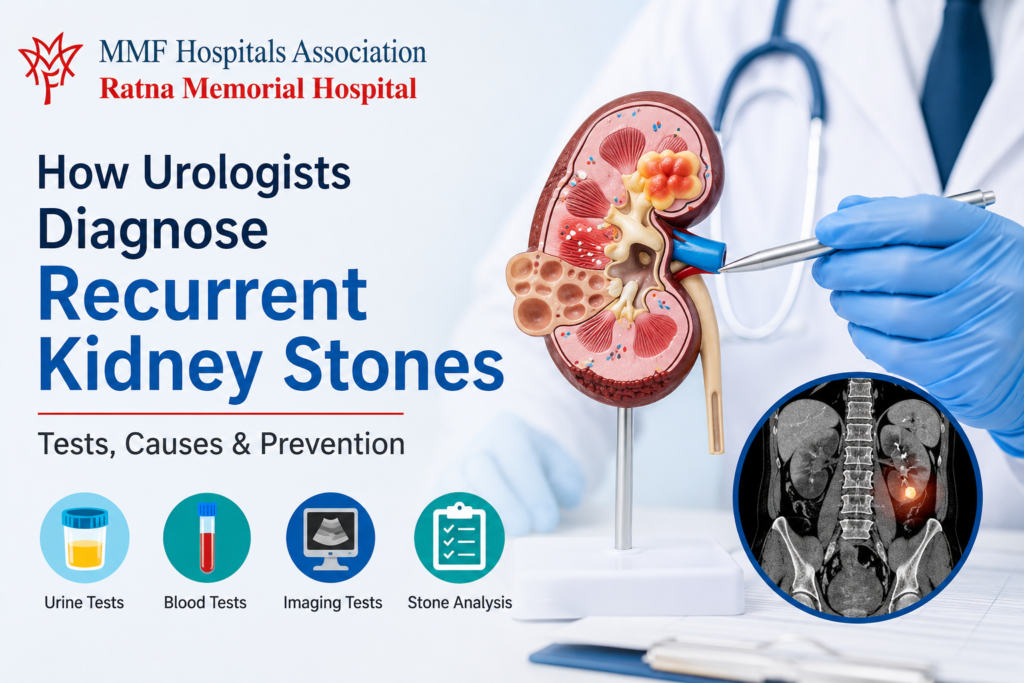
Urologist diagnosing recurrent kidney stones in Pune

How Urologists Diagnose Recurrent Kidney Stones

Understanding Stone Evaluation at a Trusted Urology Hospital in Pune Passing or removing a kidney stone can bring immediate relief, but it does not always solve the underlying problem. Some people develop another stone within months or years because the factors responsible for stone formation are still present. Recurrent kidney stones require more than a scan to confirm their location. A urologist investigates why the stones are returning, identifies their composition and assesses whether a medical condition, dietary pattern, urinary abnormality or anatomical problem is contributing to their formation. At Ratna Memorial Hospital, patients with recurring stones can receive a detailed evaluation to guide treatment and long-term prevention. Consulting a qualified urologist in Pune is particularly important when stones return repeatedly, occur in both kidneys or are associated with infection, obstruction or declining kidney function. What Are Recurrent Kidney Stones? Recurrent kidney stones are stones that form again after a previous stone has passed naturally or been removed through treatment. A person may develop the same type of stone repeatedly or experience stones with a different composition. The most common types include: Calcium oxalate stones Calcium phosphate stones Uric acid stones Infection-related struvite stones Cystine stones caused by an inherited condition The type of stone matters because each one has different risk factors and may require a different prevention strategy. For example, advice that helps prevent a uric acid stone may not be sufficient for someone forming infection-related stones. A previous stone episode is itself an important risk factor for another episode. Therefore, recurrent stones should not be treated as isolated events without investigating the cause. Why Do Kidney Stones Keep Returning? Kidney stones form when certain substances become highly concentrated in the urine. These substances may crystallise, gradually grow and form a stone. Low urine volume is a common contributor, but recurrence can have several causes. Possible risk factors include inadequate fluid intake, excessive dietary salt, a high intake of certain animal proteins, obesity, recurrent urinary infections and a family history of stones. Some people absorb or excrete unusually high amounts of calcium, oxalate, uric acid or cystine. Certain medical conditions may also raise the risk. These include overactive parathyroid glands, gout, inflammatory bowel disease, chronic diarrhoea and disorders affecting the way nutrients are absorbed. Previous intestinal or weight loss surgery can alter oxalate absorption in some patients. The evaluation conducted by a urologist in Pune is intended to separate occasional lifestyle-related risk from an ongoing metabolic, infectious or structural cause. The First Step: A Detailed Medical History The diagnostic process usually begins with a detailed conversation. The urologist in pune asks about previous stone episodes, treatments, infections and relevant health conditions. Important information may include: The age at which the first stone developed The number and frequency of stone episodes Whether stones occurred in one or both kidneys Previous procedures such as ureteroscopy, RIRS, ESWL or PCNL Family history of kidney stones Daily fluid intake and dietary habits Regular medicines and nutritional supplements History of gout, bowel disease, urinary infections or endocrine disorders Patients should bring their previous scan reports, laboratory results, discharge summaries and stone analysis reports to the consultation whenever possible. Comparing current and older scans can help the doctor understand how quickly new stones are developing. Physical Examination and Symptom Assessment A physical examination may not reveal a small kidney stone directly, but it helps assess the patient’s general condition and identify possible complications. The urologist will ask about flank or back pain, painful urination, blood in the urine, nausea, fever and changes in urinary frequency. Fever with chills, severe pain, vomiting or difficulty passing urine may indicate obstruction or infection and can require urgent medical attention. Blood pressure, hydration status and tenderness around the kidney area may also be evaluated. The findings help determine which investigations should be performed and how urgently treatment is needed. Urine Tests for Recurrent Kidney Stones A routine urine test can provide valuable information about stone formation. It may detect blood, crystals, infection, urine acidity and other abnormalities. A urine culture may be ordered if infection is suspected. This test identifies the bacteria responsible and helps the doctor select an appropriate antibiotic. Recurrent infection is especially relevant because certain bacteria can encourage the formation of struvite stones. Urine pH is another important finding. Persistently acidic urine may encourage uric acid stones, while highly alkaline urine can be associated with certain calcium phosphate or infection-related stones. However, a single urine sample offers only a snapshot. Patients with repeated stones may require a more detailed metabolic evaluation. Why Is a 24-Hour Urine Test Important? A 24-hour urine test measures everything passed in the urine over an entire day. It can reveal abnormalities that may not appear in a routine sample. The test may measure: Total urine volume Calcium Oxalate Uric acid Citrate Sodium Creatinine Urine pH Low citrate can increase stone risk because citrate naturally helps prevent crystals from joining together. High urinary calcium, oxalate or uric acid can also encourage stone formation. A high sodium result may indicate excessive salt intake, which can increase calcium loss into the urine. The results allow the urologist to provide personalised advice instead of giving every patient the same restrictive diet. In some cases, two separate 24-hour collections may be recommended to obtain a more reliable picture of the patient’s usual urine chemistry. Blood Tests Used in Stone Evaluation Blood tests help assess kidney function and identify metabolic conditions that may be contributing to recurrence. Tests may include kidney function parameters such as serum creatinine, along with calcium, uric acid, electrolytes and bicarbonate. If the blood calcium level is elevated, the doctor may investigate parathyroid hormone levels to check for an overactive parathyroid gland. These investigations are particularly important when stones occur frequently, begin at a young age, affect both kidneys or are accompanied by reduced kidney function. Imaging Tests Used to Locate Kidney Stones Imaging shows the number, size and location of stones. It can also reveal urinary obstruction, swelling of the

How Urologists Diagnose Recurrent Kidney Stones Read More »

Urology Hospital in Pune

Expert Urology Care You Can Trust | Best Urologist in Pune | Ratna Memorial Hospital

Urinary and kidney problems can significantly impact your health and quality of life. Whether you’re dealing with kidney stones, prostate enlargement, urinary tract infections (UTIs), bladder disorders, or other complex urological conditions, timely diagnosis and expert treatment are essential. At Ratna Memorial Hospital, our experienced specialists provide advanced, patient-focused care using the latest diagnostic and minimally invasive treatment techniques. The hospital has been a trusted name in Pune for decades and established one of the city’s first dedicated urology centres, treating thousands of patients with advanced urological care. Why Choose Ratna Memorial Hospital for Urology Treatment in Pune? At Ratna Memorial Hospital, we believe every patient deserves compassionate, personalized care. Our team of experienced urologists combines medical expertise with advanced technology to deliver effective treatment while ensuring patient comfort. Our Urology Services Include: Kidney Stone Diagnosis & Treatment Laser Kidney Stone Surgery Prostate Enlargement (BPH) Treatment Urinary Tract Infection (UTI) Management Bladder Disorders Male Urology & Andrology Urinary Incontinence Treatment Urological Cancer Evaluation & Management Minimally Invasive & Endoscopic Urological Procedures Our goal is to provide accurate diagnosis, effective treatment, and faster recovery for every patient. Advanced Technology for Better Outcomes Modern urological care requires precision. Ratna Memorial Hospital utilizes advanced imaging, endoscopic techniques, and minimally invasive surgical procedures to improve treatment outcomes while minimizing pain, blood loss, and recovery time. The hospital’s dedicated urology department has extensive experience in managing both common and complex urinary tract conditions. Symptoms You Should Never Ignore Consult a Urologist in Pune if you experience: Blood in urine Burning sensation during urination Frequent urination Difficulty passing urine Severe lower abdominal or back pain Kidney stone symptoms Recurrent urinary tract infections Urinary leakage or incontinence Early diagnosis can prevent complications and improve treatment success. Patient-Centered Care Every patient is unique, and so is their treatment plan. At Ratna Memorial Hospital, our specialists carefully evaluate your condition, explain every available treatment option, and recommend the most appropriate solution based on your health needs. From consultation to recovery, we focus on providing compassionate care and long-term urinary health. Why Patients Trust Ratna Memorial Hospital Experienced Urologists Comprehensive Urology Care Advanced Diagnostic Facilities Minimally Invasive Procedures Patient-First Approach Trusted Healthcare Institution in Pune Book Your Consultation Today If you’re searching for the best Urologist in Pune or a trusted Urology Hospital in Pune, Ratna Memorial Hospital offers expert care for a wide range of urinary and kidney conditions. Don’t ignore urinary symptoms—early treatment can make a significant difference in your health and recovery. Take the first step toward better urinary health. Schedule your consultation with Ratna Memorial Hospital today.

Expert Urology Care You Can Trust | Best Urologist in Pune | Ratna Memorial Hospital Read More »

Hydration for kidney health awareness by Ratna Memorial Hospital Urology Centre Pune.

Hydration and Kidney Health: Why Drinking Water Before You Feel Thirsty Matters

Water is one of the most essential elements for maintaining good health, yet many people only drink water when they feel thirsty. What many don’t realize is that thirst is often a late sign of dehydration. By the time you feel thirsty, your body may already be experiencing fluid deficiency, which can affect several vital functions—including the health of your kidneys. At Ratna Memorial Hospital‘s Advanced Urology Centre in Pune, our specialists frequently treat patients with kidney-related conditions that can be aggravated by inadequate hydration. Understanding the importance of drinking enough water can help protect your kidneys and support overall well-being. Why Is Hydration Important for Your Kidneys? Your kidneys play a critical role in filtering waste products, balancing body fluids, and maintaining healthy blood pressure. Adequate water intake helps the kidneys function efficiently by flushing out toxins and waste through urine. When you don’t drink enough water, your kidneys have to work harder to concentrate urine and eliminate waste. Over time, this extra stress can increase the risk of developing various urinary and kidney-related conditions. Health Risks of Dehydration 1. Kidney Stones One of the most common consequences of inadequate hydration is the formation of kidney stones. When urine becomes highly concentrated, minerals and salts can crystallize and form stones. Drinking enough water helps dilute urine and reduces this risk. 2. Urinary Tract Infections (UTIs) Water helps flush bacteria from the urinary tract. Insufficient hydration may allow bacteria to multiply, increasing the likelihood of urinary tract infections. 3. Reduced Toxin Elimination Your body relies on water to remove waste products effectively. Dehydration can slow down this process, making it harder for the kidneys to filter and eliminate toxins efficiently. 4. Fatigue and Reduced Concentration Even mild dehydration can affect energy levels, mood, and concentration. Maintaining adequate hydration supports better physical and mental performance throughout the day. Don’t Wait Until You’re Thirsty Many people rely solely on thirst as a reminder to drink water. However, thirst often appears after the body has already lost a significant amount of fluid. Simple Hydration Tips Drink water consistently throughout the day. Aim for approximately 2.5 to 3 liters of fluids daily, unless advised otherwise by your doctor. Increase water intake during hot weather and physical activity. Monitor urine color; pale yellow urine is generally a sign of good hydration. Include water-rich fruits and vegetables in your diet. Who Should Pay Extra Attention to Hydration? Certain individuals are more vulnerable to dehydration and kidney-related complications, including: People with a history of kidney stones Individuals suffering from recurrent UTIs Older adults Athletes and outdoor workers Patients with chronic kidney conditions If you fall into any of these categories, maintaining adequate hydration becomes even more important. Expert Urology Care at Ratna Memorial Hospital At Ratna Memorial Hospital’s Advanced Urology Centre in Pune, our experienced urologists provide comprehensive diagnosis and treatment for: Kidney stones Urinary tract infections Prostate disorders Bladder conditions Urinary incontinence Other complex urological disorders Using advanced technology and patient-centered care, our specialists ensure accurate diagnosis and effective treatment for a wide range of urological conditions. When Should You Consult a Urologist? Seek medical advice if you experience: Pain while urinating Frequent urinary tract infections Blood in urine Persistent lower abdominal or flank pain Difficulty passing urine Symptoms suggestive of kidney stones Early diagnosis and treatment can help prevent complications and improve long-term kidney health. Conclusion Healthy hydration is one of the simplest yet most effective ways to protect your kidneys. Don’t wait until you feel thirsty to drink water. Consistent hydration can reduce the risk of kidney stones, urinary tract infections, and other kidney-related complications. If you have concerns about your urinary or kidney health, consult the experts at Ratna Memorial Hospital’s Advanced Urology Centre in Pune for timely evaluation and personalized treatment. Ratna Memorial Hospital – Urology Centre in Pune📍 Senapati Bapat Road, Pune📞 020 6509 7777🌐 www.ratnahospital.in

Hydration and Kidney Health: Why Drinking Water Before You Feel Thirsty Matters Read More »

Minimally Invasive Surgery performed by Urologist in Pune at Rtana Hospital

Why Minimally Invasive Urology is Transforming Patient Care in Pune

When it comes to treating kidney stones, prostate problems, urinary tract disorders, and other urological conditions, patients today are looking for treatments that are safer, less painful, and allow quicker recovery. This is where minimally invasive urology plays a major role. At MMF Ratna Memorial Hospital, advanced urology treatments are designed to help patients recover faster while minimizing discomfort and hospital stay. The hospital is recognized as one of the dedicated urology centres in Pune, offering modern surgical techniques with precision-driven care. What is Minimally Invasive Urology? Minimally invasive urology involves advanced surgical procedures performed using tiny incisions, endoscopic instruments, laser technology, or robotic-assisted techniques. Unlike traditional open surgeries, these procedures reduce trauma to the body and improve recovery outcomes. Common minimally invasive urology procedures include: Kidney stone removal (RIRS, URS, PCNL) Laser prostate surgery Bladder stone treatment Ureter and kidney surgeries Treatment for urinary tract obstruction Urological cancer procedures Modern urology departments now use advanced imaging and endoscopic systems to improve surgical precision and patient safety. Benefits of Minimally Invasive Urology Reduced Pain and Blood Loss Smaller incisions mean less tissue damage during surgery. Patients experience significantly reduced pain and lower blood loss compared to conventional surgery. Shorter Hospital Stay Many minimally invasive procedures allow patients to return home much earlier, reducing hospital stay and overall recovery stress. Faster Recovery Patients can often resume normal daily activities more quickly, making these procedures ideal for working professionals and elderly patients alike. Improved Precision and Safety Advanced laparoscopic and endoscopic technologies help uro surgeons perform procedures with greater accuracy, minimizing complications and improving treatment success. Advanced Urology Care at Ratna Memorial Hospital The Urology Department at MMF Ratna Memorial Hospital offers comprehensive diagnosis and treatment for urinary and reproductive system disorders. The center is equipped to handle both routine and complex urological conditions with advanced minimally invasive procedures. The hospital provides treatment for: Kidney stones Enlarged prostate (BPH) Urinary infections Bladder disorders Male reproductive health conditions Urological cancers The experienced team of urologist in Pune focuses on patient-centric treatment with modern technology and personalized care. When Should You Consult a Urologist in Pune? You should consult a urologist in Pune if you experience: Frequent urinary infections Burning urination Blood in urine Kidney stone pain Difficulty passing urine Prostate-related symptoms Urinary incontinence Early diagnosis and timely treatment can prevent complications and improve long-term health outcomes. Trusted Urology Center in Pune For patients searching for an experienced urologist in Pune or an advanced urology centre in Pune, MMF Ratna Memorial Hospital continues to provide trusted care with modern minimally invasive techniques and advanced surgical expertise. To book a consultation, visit Ratna Memorial Hospital or call 02065097777.

Why Minimally Invasive Urology is Transforming Patient Care in Pune Read More »

Urology Centre in Pune explaining urine color changes, urinary infections, kidney stones and urinary health signs

Your Urine Can Reveal Important Health Signs

Changes in urine are often the body’s early warning signs of underlying urinary or kidney-related conditions. While many people ignore symptoms like cloudy urine, strong odor, or frequent urination, these changes may indicate infections, kidney stones, bladder disorders, or other urological problems. At Ratna Memorial Hospital Pune, patients receive expert diagnosis and advanced treatment for a wide range of urological conditions. As a trusted urology hospital in Pune, the hospital offers comprehensive care with experienced specialists and modern technology. Common Urine Changes You Should Never Ignore 1. Burning During Urination A burning sensation while urinating is commonly linked to urinary tract infections (UTIs), bladder infections, or kidney stones. Delayed treatment may lead to worsening infection. 2. Blood in Urine Blood in urine should never be ignored. It may indicate kidney stones, urinary tract infections, bladder conditions, or kidney-related disorders. 3. Frequent Urination Frequent urges to urinate, especially at night, can sometimes be associated with bladder issues, prostate enlargement, diabetes, or urinary infections. 4. Dark or Cloudy Urine Dark, cloudy, or foamy urine may signal dehydration, infection, or kidney-related problems requiring medical attention. 5. Strong Urine Odor Persistent foul-smelling urine can occur due to bacterial infections, dietary changes, or metabolic conditions. How Urine Reflects Your Health Urine contains waste products filtered by the kidneys, making it an important indicator of overall health. Changes in urine color, odor, frequency, or appearance may help detect: Urinary tract infections (UTIs) Kidney stones Kidney disease Bladder disorders Diabetes-related complications Prostate conditions Early diagnosis can help prevent complications and ensure faster recovery. Advanced Urology Care at Ratna Hospital Pune Ratna Memorial Hospital Pune is recognized as a trusted urology hospital in Pune offering comprehensive care for urinary and kidney-related conditions. The hospital provides: Kidney stone treatment UTI management Prostate care Bladder disorder treatment Male reproductive health services Minimally invasive urology procedures The hospital’s experienced specialists focus on accurate diagnosis and personalized treatment plans for better patient outcomes. When Should You Visit a Urology Hospital in Pune? You should consult a urologist in Pune if you experience: Pain or burning during urination Blood in urine Frequent urinary infections Difficulty passing urine Lower abdominal pain Persistent urine odor Changes in urine color or consistency Seeking timely medical care can prevent serious complications and improve quality of life. Why Choose Ratna Memorial Hospital Pune? As a leading urology hospital in Pune, Ratna Memorial Hospital combines advanced technology, experienced doctors, and patient-focused care under one roof. The hospital’s urology department is equipped to manage both routine and complex urinary tract conditions efficiently. Book Your Appointment If you notice unusual urinary symptoms, consult the specialists at Ratna Memorial Hospital Pune for expert evaluation and treatment. 📞 020 6509 7777🌐 www.ratnahospital.in

Your Urine Can Reveal Important Health Signs Read More »

Urologist at Ratna Hospital in Pune explaining symptoms of urinary track

Don’t Ignore These Urinary Symptoms: When to Consult a Urologist in Pune

Urinary problems are often ignored until they start affecting daily life. Symptoms such as burning during urination, blood in urine, frequent urination, or strong urine odor may appear minor initially, but they can sometimes indicate urinary tract infections (UTIs), kidney stones, prostate issues, or other urological conditions. At MMF Ratna Memorial Hospital, experienced specialists provide advanced diagnosis and treatment for a wide range of urinary tract and kidney-related conditions. The hospital’s urology department focuses on timely diagnosis, minimally invasive procedures, and personalized patient care. Common Urinary Symptoms You Should Not Ignore   1. Burning During Urination A burning sensation while passing urine is commonly associated with urinary tract infections, bladder inflammation, or kidney stones. If the discomfort persists, medical evaluation becomes important. 2. Blood in Urine Blood in urine should never be ignored. It may occur due to infections, kidney stones, urinary tract injury, or other underlying urinary conditions. 3. Frequent Urination Frequent urges to urinate, especially at night, may indicate bladder problems, infections, prostate enlargement, or uncontrolled diabetes. 4. Dark or Cloudy Urine Cloudy urine or changes in urine color can sometimes point to dehydration, infections, or kidney-related issues. 5. Strong Urine Odor Persistent foul-smelling urine may indicate bacterial infections or dietary and metabolic issues that require medical attention. Why Early Diagnosis Matters Ignoring urinary symptoms can lead to complications such as: Severe urinary tract infections Kidney damage Recurrent kidney stones Bladder dysfunction Prostate complications Early medical evaluation helps doctors identify the root cause quickly and begin appropriate treatment before the condition worsens. The urology department at MMF Ratna Memorial Hospital offers advanced diagnostic and minimally invasive treatment options for kidney stones, urinary tract disorders, prostate conditions, and other urological problems. Advanced Urology Care at Ratna Memorial Hospital, Pune The hospital provides comprehensive urology services including: Kidney stone treatment UTI management Prostate care Urinary incontinence treatment Endoscopic and minimally invasive surgeries Male reproductive health treatment The department is supported by experienced specialists including: Dr. Hiralal Chaudhari – Best Urologist SB Road, Kidney Stone Specialist SB Road, Prostate Cancer Treatment in SB Road, Pune Dr. Suraj Lunavat – Urologist in Pune When Should You Visit a Urologist in Pune? You should consult a urologist in Pune if you experience: Pain or burning during urination Recurrent UTIs Blood in urine Difficulty passing urine Lower abdominal or back pain Sudden urinary urgency Kidney stone symptoms Timely medical care can prevent long-term complications and improve recovery outcomes. Trusted Urology Hospital in Pune With decades of healthcare excellence, MMF Ratna Memorial Hospital , a Urology Hospital in Pune, is recognized as one of the trusted healthcare institutions in Pune, offering comprehensive urology care with advanced medical infrastructure and expert urologists in Pune. For appointments and urology consultations: 📞 020 6509 7777 Visit: Ratna Memorial Hospital

Don’t Ignore These Urinary Symptoms: When to Consult a Urologist in Pune Read More »