
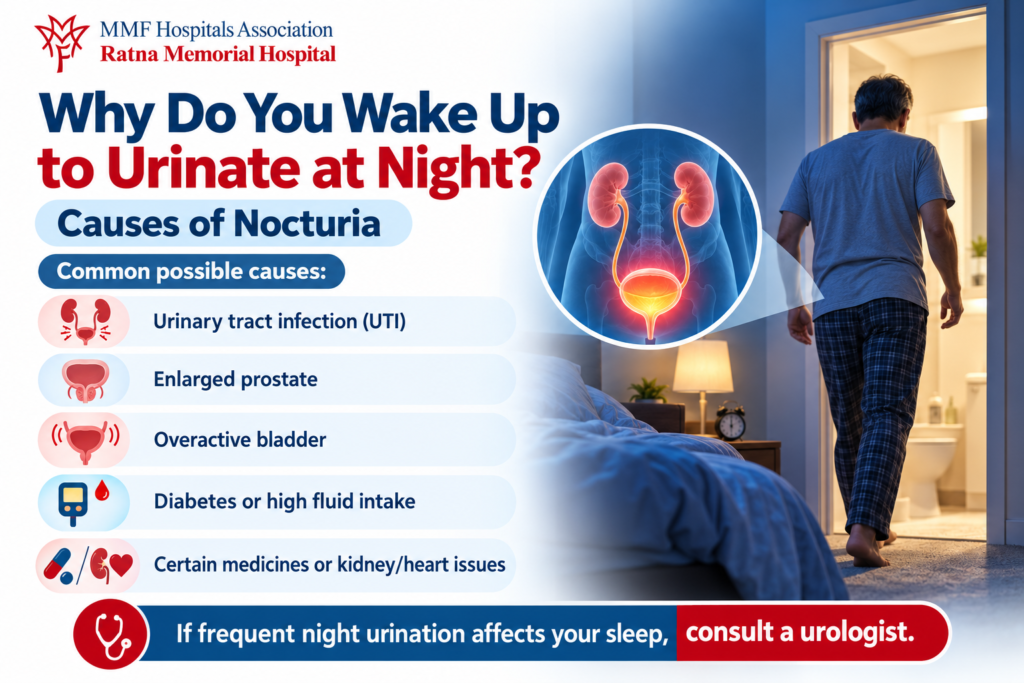
Why Do You Wake Up to Urinate at Night? Understanding the Causes of Nocturia
Why Do You Wake Up to Urinate at Night? Understanding the Causes of Nocturia Waking up once during the night to use the bathroom may not seem unusual. However, if you frequently interrupt your sleep to urinate, it could indicate a condition known as nocturia. Although nighttime urination becomes more common with age, it is not always a natural part of ageing and may be associated with underlying urinary or medical conditions. Frequent nighttime urination can disturb sleep, cause daytime tiredness, and affect overall quality of life. Understanding why it happens is important for identifying the appropriate treatment. At Ratna Memorial Hospital, Pune, urinary health concerns are evaluated through clinical assessment and appropriate diagnostic investigations to help patients understand their symptoms. What Is Nocturia? Nocturia is the medical term for waking up from sleep one or more times specifically to pass urine. While occasionally getting up at night may be harmless, repeated episodes that interrupt sleep may require medical attention. Normally, the body produces less urine during sleep, allowing several hours of uninterrupted rest. When nighttime urine production increases, bladder storage capacity decreases, or certain health conditions affect urinary function, a person may experience repeated nighttime urination. The condition can affect both men and women, particularly older adults. What Are the Common Causes of Nocturia? Several lifestyle habits, urinary disorders, and medical conditions can contribute to nighttime urination. 1. Urinary Tract Infection (UTI) A urinary tract infection can irritate the bladder and increase the urge to urinate, including during the night. Common associated symptoms include: Burning sensation while urinating Frequent urinary urgency Lower abdominal discomfort Cloudy urine or changes in urine appearance A urine examination may help identify infection and guide suitable treatment. 2. Enlarged Prostate in Men An enlarged prostate, medically known as benign prostatic hyperplasia (BPH), is a common condition among ageing men. As the prostate enlarges, it may interfere with normal urine flow and bladder emptying. Men may experience: Frequent nighttime urination Weak urine stream Difficulty starting urination Feeling that the bladder has not emptied completely A urologist may recommend clinical examination and appropriate investigations to assess prostate-related urinary symptoms. 3. Overactive Bladder An overactive bladder causes sudden and frequent urges to urinate, sometimes even when the bladder is not full. People with this condition may experience increased daytime frequency, nighttime urination, and occasionally involuntary urine leakage. Treatment may involve bladder training, lifestyle modifications, pelvic floor exercises, or medication depending on the diagnosis. 4. Diabetes and Increased Urine Production Both poorly controlled diabetes mellitus and certain other medical conditions can increase urine production. When blood glucose levels remain elevated, the kidneys may remove excess glucose through urine, taking additional water with it. This can lead to: Increased urination during the day and night Excessive thirst Fatigue Increased urine volume Persistent symptoms may require blood glucose testing and medical evaluation. 5. Excessive Fluid Intake Before Bedtime Drinking large quantities of water, tea, coffee, or other beverages shortly before bedtime can increase nighttime urine production. Caffeine and alcohol may also contribute to urinary frequency. Adjusting evening fluid intake may help some individuals. However, it is important to maintain adequate hydration throughout the day rather than unnecessarily restricting water consumption. 6. Kidney and Heart-Related Conditions Certain kidney conditions can affect the body’s ability to regulate fluid and urine production. Heart-related conditions may also contribute to nighttime urination. For example, fluid accumulated in the legs during the day may return to the circulation when lying down, increasing urine production overnight. These symptoms require appropriate medical assessment, particularly when accompanied by leg swelling or breathing difficulties. 7. Certain Medications Some medications, especially diuretics prescribed for high blood pressure or fluid retention, can increase urine production. The timing of medication may influence nighttime urinary frequency. Patients should never stop or change prescribed medication without consulting their treating doctor. 8. Sleep Disorders Sleep conditions such as obstructive sleep apnea may also contribute to nocturia. Some people awaken because of disturbed breathing or poor sleep and then notice an urge to urinate. Others may produce additional urine at night due to physiological changes associated with sleep apnea. Identifying and treating the underlying sleep disorder may help improve nighttime symptoms. When Should Frequent Nighttime Urination Be a Concern? Occasional nighttime urination is not necessarily a cause for alarm. However, medical evaluation is advisable when: You wake up several times every night to urinate. Your sleep and daytime activities are affected. You experience burning or discomfort during urination. Your urinary stream becomes weak or difficult to start. You notice changes in urine volume or bladder control. Nighttime urination is accompanied by excessive thirst. Blood in urine, fever with urinary symptoms, or inability to pass urine requires prompt medical attention. How Is Nocturia Diagnosed? A detailed medical assessment helps identify whether nocturia is caused by increased urine production, reduced bladder storage capacity, disturbed sleep, or another health condition. A urologist in Pune may recommend the following investigations based on individual symptoms: Medical History: Reviewing urinary habits, fluid intake, medications, existing medical conditions, and sleep patterns. Bladder Diary: Recording fluid consumption, urination frequency, urine volume, and nighttime symptoms over several days. Urine Examination: Checking for infection, blood, glucose, or other abnormalities. Blood Tests: Evaluating blood glucose levels and kidney function when clinically appropriate. Ultrasound Examination: Assessing the kidneys, bladder, prostate, and residual urine after urination when indicated. Additional bladder function tests or sleep studies may be considered in selected cases. What Are the Treatment Options for Nocturia? Treatment depends on the underlying cause rather than the number of nighttime bathroom visits alone. Lifestyle Modifications Certain adjustments may help reduce nighttime urinary frequency: Avoid excessive fluid intake close to bedtime. Limit caffeine and alcohol, particularly during the evening. Maintain a regular sleep schedule. Manage blood glucose and other chronic conditions. Discuss medication timing with your doctor. Practice bladder training when medically recommended. Medical Treatment Depending on the diagnosis, treatment may include: UTI Treatment: Appropriate medication for confirmed urinary infections. Prostate Management: Medication or selected procedures for significant prostate enlargement.
Why Do You Wake Up to Urinate at Night? Understanding the Causes of Nocturia Read More »