
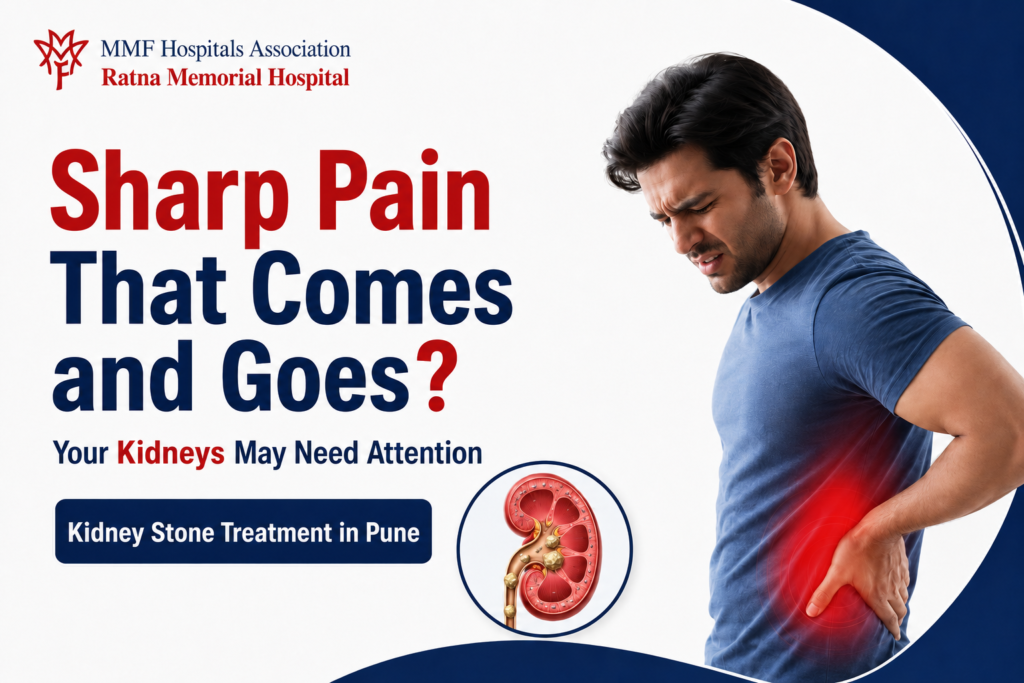
A sudden, sharp pain in your back or side can be difficult to ignore, especially when it disappears and returns without warning. Many people assume it is caused by a muscle strain, poor posture, or indigestion. However, intense pain that comes and goes in waves may sometimes indicate a kidney stone moving through the urinary tract.
Kidney stones can vary considerably in size. Some remain inside the kidney without causing noticeable symptoms, while others move into the ureter, the narrow tube connecting the kidney to the bladder. When a stone obstructs urine flow or irritates the ureter, it can cause severe pain known as renal colic.
Timely medical evaluation can identify the cause and help you receive appropriate Kidney Stone treatment in Pune before complications develop.
Why Does Kidney Stone Pain Come and Go?
Kidney stone pain is often different from ordinary back pain. It may begin suddenly, become intense and then ease temporarily before returning.
This wave-like pattern occurs because the ureter contracts while trying to move the stone towards the bladder. The location of the pain may also change as the stone travels through the urinary tract.
According to the National Institute of Diabetes and Digestive and Kidney Diseases, kidney stone pain may affect the back, side, lower abdomen or groin. It can last for a short or extended period and may come and go in waves.
Although this pain pattern is commonly associated with kidney stones, proper testing is necessary because several abdominal, urinary and musculoskeletal conditions can produce similar symptoms.
Common Signs of Kidney Stones
Sharp pain is one of the most recognisable symptoms, but kidney stones may cause other urinary and digestive problems. You should watch for:
- Severe pain below the ribs on either side of the back
- Pain that moves towards the lower abdomen or groin
- Pain that increases and decreases in intensity
- Burning or discomfort while passing urine
- Pink, red or brown urine
- Frequent or urgent need to urinate
- Cloudy or unpleasant-smelling urine
- Nausea and vomiting
- Passing only a small amount of urine
The symptoms depend on the stone’s size, location and whether it is blocking urine flow. Small stones may pass without causing noticeable discomfort, while larger or obstructing stones may require medical treatment.
Is It Kidney Pain or Ordinary Back Pain?
Kidney stone pain and muscular back pain can sometimes feel similar. However, there are a few general differences.
Muscular pain often becomes worse with movement, bending, lifting or pressing the affected area. It may improve with rest or a change in posture. Kidney stone pain is usually deeper, more intense and commonly felt beneath the ribs or along the side of the body. It may spread towards the abdomen or groin and is often accompanied by urinary symptoms, nausea or vomiting.
These differences are not enough to confirm a diagnosis. If the pain is severe, recurring or associated with changes in urination, consult a Kidney specialist in Pune for a complete evaluation.
When Does Kidney Pain Require Urgent Attention?
A kidney stone can become dangerous when it blocks urine drainage and infection develops behind the obstruction. Seek urgent medical care if you experience:
- Severe or unbearable pain
- Fever, chills or shivering
- Persistent vomiting
- Blood in the urine
- Difficulty passing urine
- Very little or no urine output
- Pain accompanied by weakness or confusion
The NHS guidance on kidney stones recommends urgent medical attention for severe pain, a high temperature, chills or blood in the urine. These symptoms should not be managed only with home remedies.
How Are Kidney Stones Diagnosed?
A doctor begins by reviewing the location and pattern of your pain, urinary symptoms, medical history, diet and previous episodes of kidney stones. The evaluation may include:
Urine tests
A urine test can detect blood, infection and minerals associated with stone formation.
Blood tests
Blood tests may be used to assess kidney function and measure calcium, uric acid and other relevant substances.
Ultrasound
An ultrasound can help identify stones, urinary obstruction and swelling of the kidney without using radiation.
CT scan
A non-contrast CT scan may provide detailed information about the size, number and location of stones. The test selected depends on the patient’s symptoms and clinical condition.
What Does Kidney Stone Treatment in Pune Involve?
Treatment is selected according to the stone’s size, position, composition, symptoms and effect on kidney function.
Conservative management
Some small stones may pass naturally. Under medical supervision, treatment may include appropriate hydration, prescribed pain relief, medicines for nausea and medication that may help the ureter relax.
Patients should not force excessive water intake during severe pain, vomiting or suspected obstruction unless advised by a doctor.
Shock wave lithotripsy
Shock wave lithotripsy uses externally generated energy to break selected stones into smaller pieces that can pass through the urinary tract.
Ureteroscopy
A thin instrument is introduced through the urinary passage to locate the stone. The stone may be removed directly or fragmented using laser energy.
Percutaneous nephrolithotomy
This procedure may be recommended for large or complex kidney stones. The surgeon accesses the kidney through a small incision in the back and removes the stone using specialised instruments.
The most appropriate method of Kidney Stone treatment in Pune should be decided after reviewing imaging results and the patient’s overall health.
Can Kidney Stones Be Prevented?
Kidney stones can recur, so prevention remains important even after the pain has stopped. General preventive measures include:
- Drinking sufficient water throughout the day
- Increasing fluid intake during hot weather or physical activity
- Limiting excessive salt and highly processed food
- Avoiding unnecessary dietary supplements
- Maintaining a balanced intake of calcium
- Following stone-specific dietary recommendations
- Managing obesity, diabetes and other associated conditions
- Completing stone analysis and metabolic testing when advised
Dietary advice should be based on the stone type. Patients should not eliminate calcium or other major food groups without professional guidance.
Consult a Kidney Specialist at Ratna Memorial Hospital
Pain that comes and goes should not be ignored simply because it temporarily improves. A stone may continue moving, remain lodged in the urinary tract or obstruct urine flow even when the pain becomes less intense.
If you are experiencing sharp side pain, painful urination, blood in the urine or recurring urinary discomfort, consult the appropriate specialist at Ratna Memorial Hospital. Timely diagnosis can help determine whether you require observation, medication or a procedure for Kidney Stone treatment in Pune.
A consultation with a Kidney specialist in Pune can also help identify factors contributing to repeated stone formation and create an individualised prevention plan.
This article is intended for general information and does not replace a medical consultation. Seek urgent care for severe pain, fever, persistent vomiting or inability to pass urine.