

MMF Ratna Memorial Hospital

Tag: prostate problems

prostate problems

Prostate enlargement causing difficulty urinating with age – Ratna Hospital Pune

Why Does Urination Become Difficult With Age? Understanding Prostate Enlargement

As men grow older, changes in urinary habits are common. Some may notice that their urine flow has become weaker, while others experience difficulty starting urination, frequent bathroom visits, or the feeling that their bladder is never completely empty. Although these symptoms may develop gradually, they should not automatically be considered a normal part of ageing. One common reason for these changes is benign prostatic hyperplasia (BPH), a non-cancerous enlargement of the prostate gland that becomes more common with age. At Ratna Hospital, Pune, raising awareness about age-related urinary problems is an important step towards helping patients recognise symptoms and seek appropriate medical evaluation. What Is Prostate Enlargement? The prostate is a small gland located just below the urinary bladder. It surrounds the urethra, the tube that carries urine from the bladder out of the body. As men age, the prostate may gradually increase in size. This condition is known as benign prostatic hyperplasia or BPH. When the prostate enlarges, it can press against the urethra and interfere with the normal flow of urine. This may cause symptoms such as a weak urinary stream, delayed urination, or difficulty emptying the bladder. Importantly, an enlarged prostate is not the same as prostate cancer. However, similar urinary symptoms can occur in different prostate and bladder conditions, making proper evaluation essential. NIDDK+1 Why Does the Prostate Enlarge With Age? The exact cause of prostate enlargement is not completely understood. However, age-related hormonal changes are believed to play an important role. The prostate may continue growing throughout adulthood, and the likelihood of enlargement increases with age. Several factors may be associated with prostate enlargement. 1. Natural Ageing Prostate enlargement becomes increasingly common after the age of 50. As the prostate grows, it may place pressure on the urethra and make urine flow more difficult. 2. Hormonal Changes Changes in male hormone activity may contribute to prostate tissue growth. Dihydrotestosterone (DHT), a hormone derived from testosterone, is involved in prostate development and growth. 3. Family History Men whose close family members have experienced prostate enlargement may have a greater likelihood of developing the condition. 4. Other Health Factors Conditions such as obesity and metabolic disorders may be associated with urinary symptoms and prostate enlargement. However, these factors do not mean that every older man will develop troublesome prostate symptoms. What Are the Common Symptoms of an Enlarged Prostate? The symptoms of prostate enlargement usually develop gradually and may become more noticeable over time. Common warning signs include: Weak urine stream: Urine flows more slowly than usual. Difficulty starting urination: It takes longer to begin passing urine. Frequent urination: The need to visit the bathroom increases. Night-time urination: Waking repeatedly during sleep to urinate. Incomplete bladder emptying: Feeling that urine remains in the bladder. Intermittent urine flow: Urination starts and stops unexpectedly. Urinary urgency: Experiencing a sudden, strong urge to urinate. Post-urination dribbling: Small amounts of urine leak after finishing. The severity of symptoms does not always correspond to prostate size. Some men with a relatively large prostate experience few symptoms, while others with smaller enlargement may have significant urinary difficulties. How Does Prostate Enlargement Affect Urination? To understand why urination becomes difficult, it helps to understand how the bladder and prostate work together. Normally, the bladder contracts to push urine through the urethra. When the prostate becomes enlarged, it may narrow the urethral passage and increase resistance to urine flow. The bladder then needs to work harder to empty itself. Over time, this additional pressure may contribute to changes in bladder function. Some patients may experience: Reduced urine flow. Increased urinary frequency. Difficulty emptying the bladder. Sudden urinary urgency. Urine retention in more severe cases. These symptoms can affect sleep, travel, work, and overall quality of life. Is Difficulty Urinating Always Caused by Prostate Enlargement? No. Although an enlarged prostate is a common cause of urinary difficulty in older men, other medical conditions can produce similar symptoms. These may include: Urinary tract infections: Infections can cause frequent urination, urgency, discomfort, or burning. Bladder dysfunction: Changes in bladder muscle or nerve function may affect urine storage and emptying. Urethral stricture: Narrowing of the urethra can restrict urine flow. Prostatitis: Inflammation of the prostate may cause urinary discomfort or difficulty. Prostate cancer: Some symptoms may overlap with those of benign prostate enlargement, although early prostate cancer often causes no symptoms. A medical examination is necessary to determine the underlying cause rather than assuming all urinary changes are related to ageing. How Is Prostate Enlargement Diagnosed? A urologist may recommend investigations depending on the patient’s symptoms, age, health history, and examination findings. Diagnostic Test Purpose Urine examination Checks for infection, blood, or other abnormalities. PSA blood test May help assess prostate-related concerns when clinically appropriate. Digital rectal examination Helps assess prostate size and physical characteristics. Ultrasound Evaluates the prostate, bladder, and remaining urine when indicated. Uroflowmetry Measures urine flow rate and pattern. Post-void residual measurement Checks how much urine remains after urination. Not every patient needs all these tests. A urologist determines which investigations are appropriate based on individual circumstances. What Are the Treatment Options for an Enlarged Prostate? Treatment depends on symptom severity, prostate size, associated complications, and the patient’s overall health. 1. Lifestyle Modifications Men with mild urinary symptoms may benefit from simple changes, including: Reducing excessive caffeine and alcohol consumption. Limiting fluid intake shortly before bedtime while staying adequately hydrated during the day. Maintaining a healthy body weight. Avoiding unnecessary delays in urination. Managing constipation. Reviewing medications that may worsen urinary symptoms with a doctor. These measures may help improve symptoms but do not necessarily reduce prostate size. 2. Medications Doctors may recommend medicines to improve urinary flow or manage prostate enlargement. Common medication categories include: Alpha-blockers: Help relax muscles around the prostate and bladder neck, making urination easier. 5-alpha-reductase inhibitors: May gradually reduce prostate size in suitable patients. Medication choice depends on symptoms, prostate characteristics, medical history, and potential side effects. 3. Minimally Invasive Procedures and Surgery If symptoms are severe, medications are

Why Does Urination Become Difficult With Age? Understanding Prostate Enlargement Read More »
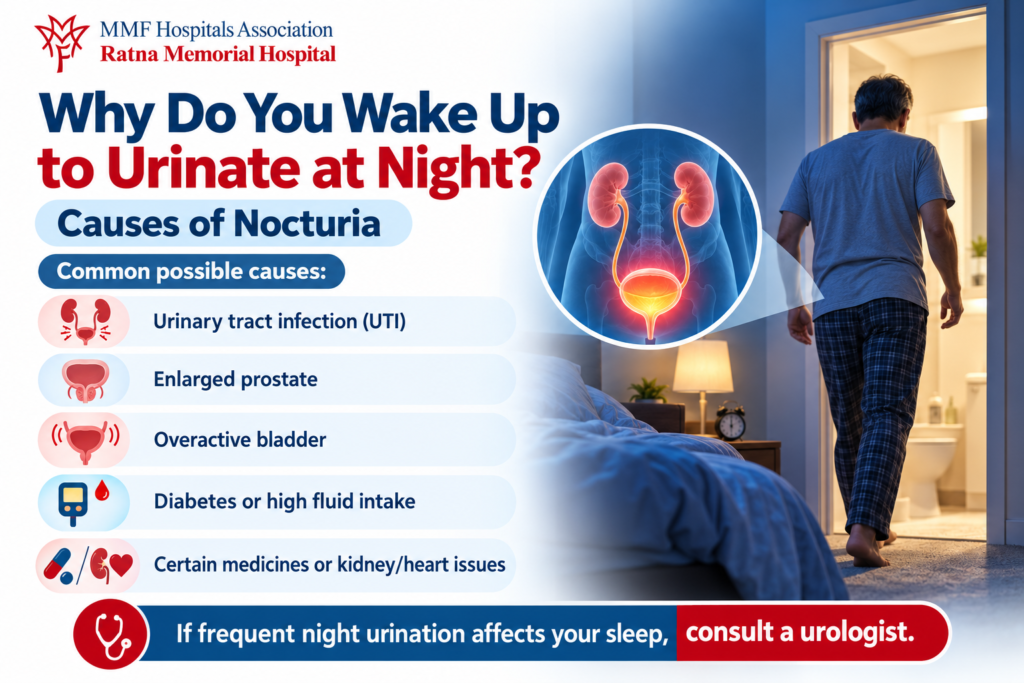
Causes of nocturia and nighttime urination – Ratna Memorial Hospital Pune

Why Do You Wake Up to Urinate at Night? Understanding the Causes of Nocturia

Why Do You Wake Up to Urinate at Night? Understanding the Causes of Nocturia Waking up once during the night to use the bathroom may not seem unusual. However, if you frequently interrupt your sleep to urinate, it could indicate a condition known as nocturia. Although nighttime urination becomes more common with age, it is not always a natural part of ageing and may be associated with underlying urinary or medical conditions. Frequent nighttime urination can disturb sleep, cause daytime tiredness, and affect overall quality of life. Understanding why it happens is important for identifying the appropriate treatment. At Ratna Memorial Hospital, Pune, urinary health concerns are evaluated through clinical assessment and appropriate diagnostic investigations to help patients understand their symptoms. What Is Nocturia? Nocturia is the medical term for waking up from sleep one or more times specifically to pass urine. While occasionally getting up at night may be harmless, repeated episodes that interrupt sleep may require medical attention. Normally, the body produces less urine during sleep, allowing several hours of uninterrupted rest. When nighttime urine production increases, bladder storage capacity decreases, or certain health conditions affect urinary function, a person may experience repeated nighttime urination. The condition can affect both men and women, particularly older adults. What Are the Common Causes of Nocturia? Several lifestyle habits, urinary disorders, and medical conditions can contribute to nighttime urination. 1. Urinary Tract Infection (UTI) A urinary tract infection can irritate the bladder and increase the urge to urinate, including during the night. Common associated symptoms include: Burning sensation while urinating Frequent urinary urgency Lower abdominal discomfort Cloudy urine or changes in urine appearance A urine examination may help identify infection and guide suitable treatment. 2. Enlarged Prostate in Men An enlarged prostate, medically known as benign prostatic hyperplasia (BPH), is a common condition among ageing men. As the prostate enlarges, it may interfere with normal urine flow and bladder emptying. Men may experience: Frequent nighttime urination Weak urine stream Difficulty starting urination Feeling that the bladder has not emptied completely A urologist may recommend clinical examination and appropriate investigations to assess prostate-related urinary symptoms. 3. Overactive Bladder An overactive bladder causes sudden and frequent urges to urinate, sometimes even when the bladder is not full. People with this condition may experience increased daytime frequency, nighttime urination, and occasionally involuntary urine leakage. Treatment may involve bladder training, lifestyle modifications, pelvic floor exercises, or medication depending on the diagnosis. 4. Diabetes and Increased Urine Production Both poorly controlled diabetes mellitus and certain other medical conditions can increase urine production. When blood glucose levels remain elevated, the kidneys may remove excess glucose through urine, taking additional water with it. This can lead to: Increased urination during the day and night Excessive thirst Fatigue Increased urine volume Persistent symptoms may require blood glucose testing and medical evaluation. 5. Excessive Fluid Intake Before Bedtime Drinking large quantities of water, tea, coffee, or other beverages shortly before bedtime can increase nighttime urine production. Caffeine and alcohol may also contribute to urinary frequency. Adjusting evening fluid intake may help some individuals. However, it is important to maintain adequate hydration throughout the day rather than unnecessarily restricting water consumption. 6. Kidney and Heart-Related Conditions Certain kidney conditions can affect the body’s ability to regulate fluid and urine production. Heart-related conditions may also contribute to nighttime urination. For example, fluid accumulated in the legs during the day may return to the circulation when lying down, increasing urine production overnight. These symptoms require appropriate medical assessment, particularly when accompanied by leg swelling or breathing difficulties. 7. Certain Medications Some medications, especially diuretics prescribed for high blood pressure or fluid retention, can increase urine production. The timing of medication may influence nighttime urinary frequency. Patients should never stop or change prescribed medication without consulting their treating doctor. 8. Sleep Disorders Sleep conditions such as obstructive sleep apnea may also contribute to nocturia. Some people awaken because of disturbed breathing or poor sleep and then notice an urge to urinate. Others may produce additional urine at night due to physiological changes associated with sleep apnea. Identifying and treating the underlying sleep disorder may help improve nighttime symptoms. When Should Frequent Nighttime Urination Be a Concern? Occasional nighttime urination is not necessarily a cause for alarm. However, medical evaluation is advisable when: You wake up several times every night to urinate. Your sleep and daytime activities are affected. You experience burning or discomfort during urination. Your urinary stream becomes weak or difficult to start. You notice changes in urine volume or bladder control. Nighttime urination is accompanied by excessive thirst. Blood in urine, fever with urinary symptoms, or inability to pass urine requires prompt medical attention. How Is Nocturia Diagnosed? A detailed medical assessment helps identify whether nocturia is caused by increased urine production, reduced bladder storage capacity, disturbed sleep, or another health condition. A urologist in Pune may recommend the following investigations based on individual symptoms: Medical History: Reviewing urinary habits, fluid intake, medications, existing medical conditions, and sleep patterns. Bladder Diary: Recording fluid consumption, urination frequency, urine volume, and nighttime symptoms over several days. Urine Examination: Checking for infection, blood, glucose, or other abnormalities. Blood Tests: Evaluating blood glucose levels and kidney function when clinically appropriate. Ultrasound Examination: Assessing the kidneys, bladder, prostate, and residual urine after urination when indicated. Additional bladder function tests or sleep studies may be considered in selected cases. What Are the Treatment Options for Nocturia? Treatment depends on the underlying cause rather than the number of nighttime bathroom visits alone. Lifestyle Modifications Certain adjustments may help reduce nighttime urinary frequency: Avoid excessive fluid intake close to bedtime. Limit caffeine and alcohol, particularly during the evening. Maintain a regular sleep schedule. Manage blood glucose and other chronic conditions. Discuss medication timing with your doctor. Practice bladder training when medically recommended. Medical Treatment Depending on the diagnosis, treatment may include: UTI Treatment: Appropriate medication for confirmed urinary infections. Prostate Management: Medication or selected procedures for significant prostate enlargement.

Why Do You Wake Up to Urinate at Night? Understanding the Causes of Nocturia Read More »