
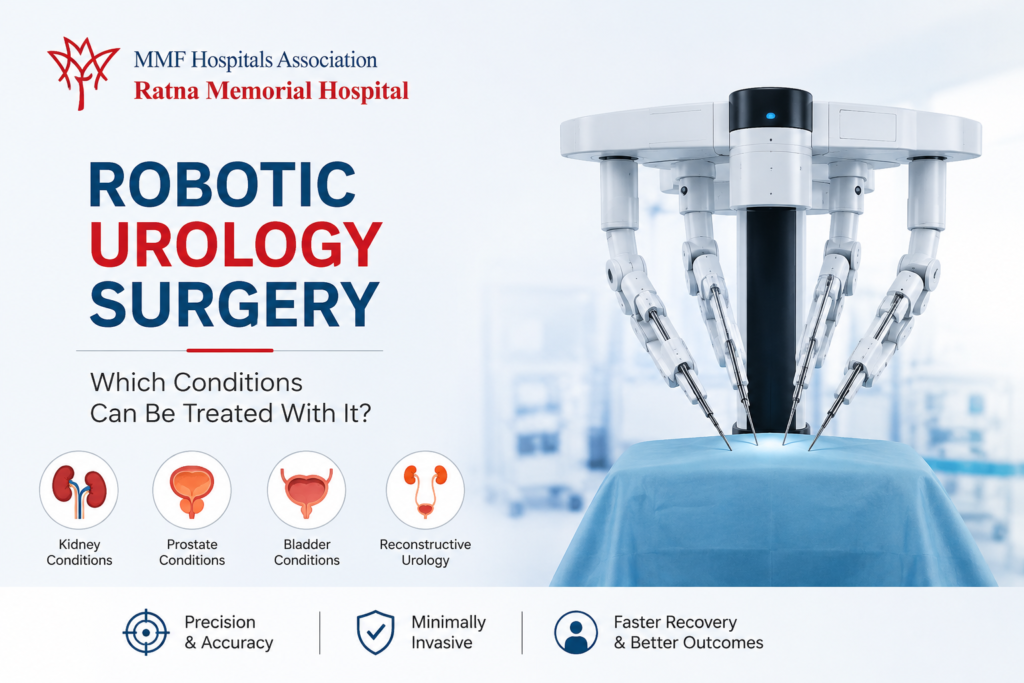
Advancements in surgical technology have changed the way many complex urological conditions are treated. Robotic Urology Surgery is one such approach that may help surgeons perform selected procedures with enhanced precision, control and visualization.
At Ratna Hospital, Pune, patients can consult experienced specialists to understand whether a robotic-assisted approach may be suitable for their specific urological condition. The choice of surgery depends on several factors, including the diagnosis, severity of the condition, overall health and individual treatment needs.
It is important to understand that robotic surgery does not mean the robot performs the operation independently. The procedure is performed by a trained surgeon who controls the robotic system throughout the surgery.
What Is Robotic Urology Surgery?
Robotic Urology Surgery is a minimally invasive surgical approach in which the surgeon uses a robotic-assisted system to perform certain urological procedures. The system can provide a detailed view of the surgical area and allows the surgeon to control specialised instruments with precise movements.
Depending on the procedure and the patient’s condition, robotic-assisted surgery may involve smaller incisions compared with some traditional open surgical procedures. However, the benefits and limitations can vary from person to person.
Your urologist will recommend the most appropriate treatment approach after a proper medical evaluation.
Which Urological Conditions Can Be Treated With Robotic Surgery?
Robotic-assisted techniques may be used for selected conditions affecting the kidneys, prostate, bladder and urinary tract. Some commonly performed or considered procedures include the following.
1. Prostate Conditions Requiring Surgery
One of the well-known applications of robotic surgery in urology is Robotic Prostate Surgery, particularly for selected patients requiring removal of the prostate for prostate cancer.
A procedure called robotic-assisted radical prostatectomy may be considered when surgery is an appropriate treatment option. The suitability of this approach depends on the stage and characteristics of the cancer, the patient’s health and the recommendations of the treating specialist.
Not every patient with a prostate condition or prostate cancer will require robotic surgery. Treatment decisions should always be individualised.
2. Kidney Cancer and Kidney Tumours
Robotic techniques may also be used for selected Kidney Cancer Surgery and kidney tumour procedures.
Depending on the location and size of a tumour, a surgeon may consider procedures such as:
- Partial Nephrectomy, where the affected part of the kidney is removed while preserving healthy kidney tissue when appropriate.
- Radical Nephrectomy, where removal of the entire kidney may be necessary in selected cases.
The treatment approach depends on the nature, size and location of the tumour, kidney function and several other medical factors.
3. Ureteropelvic Junction (UPJ) Obstruction
UPJ Obstruction affects the area where the kidney connects to the ureter. In selected cases, this obstruction may affect the normal flow of urine and require surgical treatment.
A robotic-assisted procedure called pyeloplasty may be considered to reconstruct this area. The exact treatment plan depends on the severity of the obstruction and the patient’s individual condition.
4. Complex Kidney and Ureter Reconstruction
Some patients may require Reconstructive Urology Surgery because of narrowing, injury or other structural problems affecting the urinary tract.
Robotic-assisted techniques may be used for selected reconstructive procedures involving the ureter or the connection between the kidney and urinary tract. The complexity of the condition and previous medical or surgical history can influence the choice of treatment.
5. Bladder Conditions Requiring Major Surgery
In carefully selected patients, robotic surgery may also be used for certain major Bladder Surgery procedures.
For example, patients with particular types or stages of bladder cancer may require surgical removal of the bladder. Reconstructive procedures may also be required depending on the treatment plan.
These are complex surgeries, and the most suitable approach should be decided after detailed evaluation and discussion with an experienced urology team.
6. Adrenal Gland Surgery
Although the adrenal glands are not part of the urinary tract itself, some urologic surgeons may perform robotic-assisted procedures for selected adrenal gland conditions.
Robotic Adrenal Surgery may be considered for certain adrenal tumours or other conditions when surgical treatment is required. The decision depends on the size, type and characteristics of the condition.
Why Might Robotic Surgery Be Considered?
For selected patients and procedures, robotic-assisted surgery may offer certain potential advantages, including:
- Enhanced visualisation of the surgical area
- Precise control of surgical instruments
- Greater flexibility of instrument movement in complex areas
- Smaller incisions for some procedures
- The possibility of less tissue disruption in selected cases
However, these potential benefits do not apply in the same way to every patient or every surgery. Outcomes can vary based on the condition being treated, the type of procedure, the patient’s health and other clinical factors.
A robotic approach is not automatically the best option for everyone. The most appropriate treatment should be selected after consultation with a qualified specialist.
How Is Robotic Urology Surgery Different From Traditional Surgery?
The main difference lies in how the surgical instruments are controlled. During robotic-assisted surgery, the surgeon remains in complete control and operates the system from a specialised console.
The robotic system can translate the surgeon’s hand movements into precise movements of the surgical instruments. This technology may be particularly useful for selected complex procedures performed in small or difficult-to-reach areas.
However, the choice between Robotic Surgery, laparoscopic surgery and traditional open surgery depends on the individual case. A detailed discussion with the treating urologist is essential before making a decision.
Who May Be a Candidate for Robotic Urology Surgery?
A patient may be considered for robotic-assisted surgery depending on:
- The specific urological condition
- The location and complexity of the problem
- The stage and nature of a tumour, where applicable
- Previous surgeries or medical history
- Overall health and fitness for surgery
- The availability and appropriateness of the robotic technique for the required procedure
Only a thorough consultation and medical evaluation can determine whether this approach is suitable for an individual patient.
What Should Patients Discuss With Their Urologist?
Before undergoing any urological surgery, patients should discuss important questions with their specialist, such as:
- Why is surgery recommended?
- Is robotic-assisted surgery suitable for my condition?
- What are the possible benefits and risks in my case?
- Are there non-surgical or alternative surgical treatment options?
- What type of recovery may be expected?
- What follow-up care will be required?
Having a clear understanding of the diagnosis and available treatment options can help patients make informed decisions together with their healthcare team.
Robotic Urology Care at Ratna Hospital, Pune
If you have been diagnosed with a kidney, prostate, bladder or other complex urological condition, it is important to seek an appropriate medical evaluation.
At Ratna Hospital, Pune, patients can consult the urology team to understand their condition, available treatment options and whether Robotic Urology Surgery may be considered as part of their treatment plan.
Every patient’s condition is different. The right treatment depends on a proper diagnosis, clinical evaluation and discussion of the potential benefits and risks of each available option.
Conclusion
Robotic Urology Surgery has expanded the surgical options available for selected conditions involving the prostate, kidneys, bladder, ureter and other related structures. Procedures such as Robotic Prostate Surgery, Kidney Cancer Surgery, Partial Nephrectomy, Reconstructive Urology Surgery and selected bladder procedures may be performed using robotic-assisted techniques when clinically appropriate.
The decision to undergo robotic surgery should always be made with a qualified urologist after a complete assessment. Technology can support surgical care, but the most important factor is choosing the right treatment approach for the individual patient.
For personalised evaluation and guidance regarding urological conditions and surgical treatment options, consult the urology specialists at Ratna Hospital, Pune.
Medical Disclaimer: This article is for general awareness only and does not replace professional medical advice, diagnosis or treatment. Please consult a qualified healthcare professional for personalised medical guidance.