
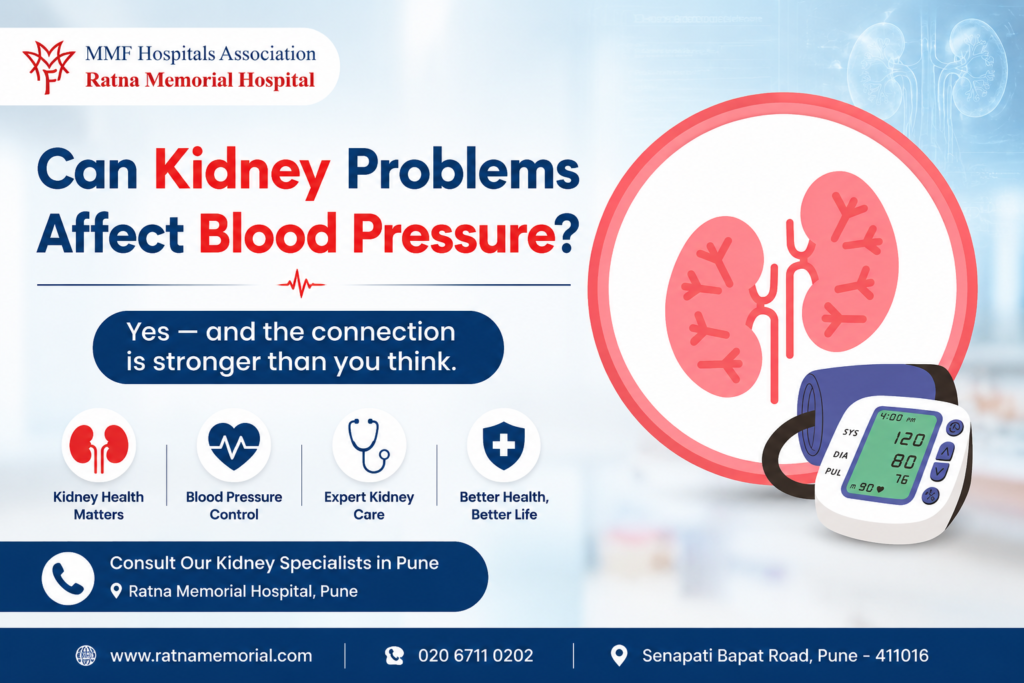
High blood pressure (hypertension) and kidney disease are closely connected. Many people are surprised to learn that unhealthy kidneys can raise blood pressure, while uncontrolled blood pressure can also damage the kidneys over time. This creates a harmful cycle that, if left untreated, may lead to chronic kidney disease (CKD) or even kidney failure.
At Ratna Memorial Hospital, our experienced kidney specialists in Pune provide comprehensive diagnosis, treatment, and preventive care for all types of kidney disorders, helping patients protect both their kidney and heart health.
How Do Kidneys Control Blood Pressure?
Your kidneys play a vital role in regulating blood pressure by:
- Removing excess salt and water from the body
- Maintaining the balance of fluids and electrolytes
- Producing hormones that help control blood pressure
When the kidneys are not functioning properly, they may retain extra fluid and sodium, causing blood pressure to rise.
Can Kidney Disease Cause High Blood Pressure?
Yes. Damaged kidneys are less effective at filtering waste and excess fluids. This leads to:
- Fluid retention
- Increased pressure on blood vessels
- Hormonal imbalance affecting blood pressure regulation
As a result, many patients with chronic kidney disease develop hypertension.
Can High Blood Pressure Damage the Kidneys?
Absolutely. Uncontrolled high blood pressure can:
- Damage tiny blood vessels in the kidneys
- Reduce kidney function over time
- Increase the risk of chronic kidney disease
- Lead to kidney failure if untreated
Early diagnosis and proper treatment can help prevent permanent kidney damage.
Common Symptoms of Kidney Problems
Kidney disease may not show symptoms in its early stages. However, warning signs include:
- Swelling in feet, ankles, or face
- Frequent or reduced urination
- Blood in urine
- Persistent fatigue
- Loss of appetite
- High blood pressure that is difficult to control
Who Is at Higher Risk?
You may have a higher risk of kidney disease if you:
- Have high blood pressure
- Have diabetes
- Have a family history of kidney disease
- Are overweight
- Smoke
- Are above 60 years of age
How Kidney Problems Are Diagnosed
Our kidney specialists may recommend:
- Blood tests
- Urine analysis
- Kidney function tests
- Ultrasound
- Blood pressure monitoring
Early screening helps identify kidney disease before serious complications develop.
Kidney Treatment in Pune
At Ratna Memorial Hospital, we offer:
- Kidney disease evaluation
- Hypertension management
- Chronic kidney disease treatment
- Kidney stone management
- Dialysis services
- Preventive kidney health check-ups
- Personalized treatment plans
Tips to Protect Your Kidneys
- Keep your blood pressure under control.
- Manage diabetes effectively.
- Reduce salt intake.
- Stay hydrated.
- Exercise regularly.
- Avoid smoking and excessive alcohol.
- Schedule regular kidney check-ups if you’re at risk.
When Should You Visit a Kidney Specialist in Pune?
Consult a kidney specialist in Pune if you experience:
- Persistent high blood pressure
- Swelling in the body
- Changes in urination
- Abnormal kidney function test results
- Diabetes with kidney-related symptoms
Early medical care can significantly slow kidney disease progression and improve long-term health outcomes.
Conclusion
Kidney health and blood pressure are closely linked. Taking timely action can help prevent serious complications affecting both your kidneys and heart. If you have high blood pressure or symptoms of kidney disease, seek expert evaluation without delay.
For expert kidney treatment in Pune, trust the experienced kidney specialists at Ratna Memorial Hospital for comprehensive diagnosis, advanced treatment, and compassionate care.