
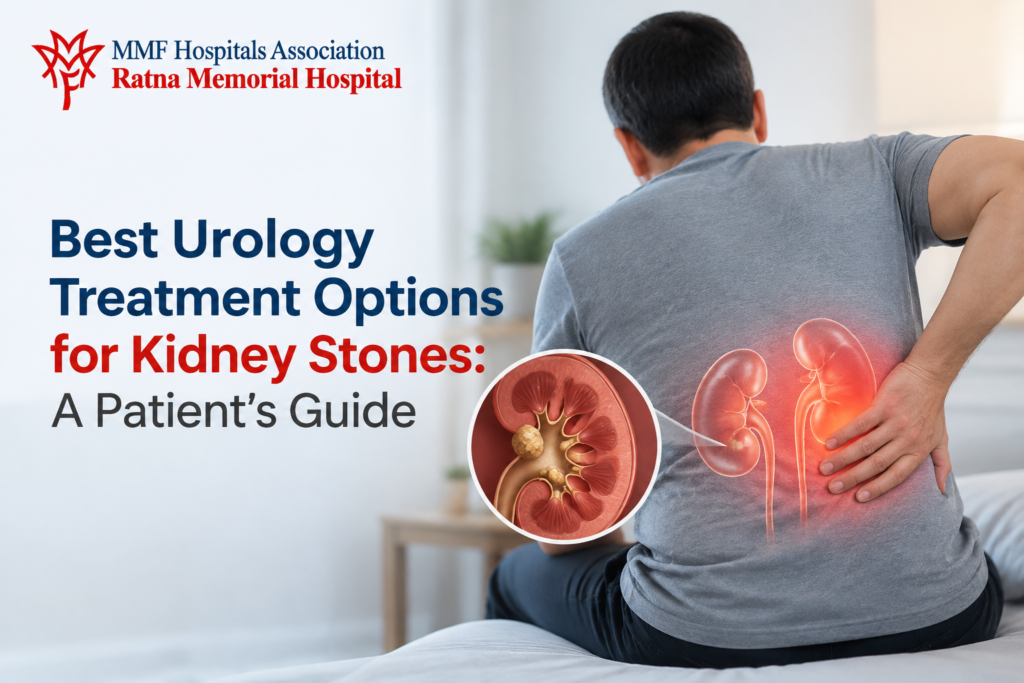
Kidney stones are one of the most common urinary problems affecting people of different age groups. These hard mineral deposits develop inside the kidneys and may cause severe pain, urinary discomfort, and complications if not treated at the right time.
With advancements in urology, kidney stone treatment has become safer, more effective, and minimally invasive. Today, patients have multiple treatment options depending on the size, location, type, and severity of the kidney stone.
At MMF Ratna Memorial Hospital, Pune, advanced urology care is provided with modern diagnostic facilities and minimally invasive techniques to help patients receive appropriate kidney stone treatment based on their individual condition.
Understanding Kidney Stones
Kidney stones are solid deposits formed when certain minerals and salts in urine become concentrated and start forming crystals. Small stones may pass naturally through urine, while larger stones may block urine flow and require medical treatment.
Common factors that may increase the risk of kidney stones include:
- Low water intake
- Excessive salt consumption
- Certain dietary habits
- Family history of kidney stones
- Obesity
- Recurrent urinary infections
- Certain metabolic conditions
Common Symptoms of Kidney Stones
Kidney stones may remain silent initially, but symptoms can appear when the stone moves or blocks the urinary pathway.
Common symptoms include:
- Severe pain in the back or side
- Pain spreading towards the lower abdomen or groin
- Burning sensation while urinating
- Blood in urine
- Frequent urge to urinate
- Nausea or vomiting
- Fever and chills in case of infection
If you experience severe pain, fever, or difficulty passing urine, timely medical evaluation is important.
Diagnosis of Kidney Stones
Accurate diagnosis helps doctors decide the most suitable treatment approach.
Common diagnostic methods include:
1. Ultrasound
A commonly used imaging test to detect kidney stones and urinary blockage.
2. CT Scan
Provides detailed information about stone size, location, and number.
3. Urine and Blood Tests
These tests help evaluate kidney function and identify factors contributing to stone formation.
At Ratna Hospital, Pune, advanced evaluation methods are used to plan personalized kidney stone treatment.
Best Urology Treatment Options for Kidney Stones
The choice of Urology treatment depends on various factors such as stone size, location, symptoms, and overall kidney health.
1. Medical Management for Small Kidney Stones
Small kidney stones may pass naturally with:
- Increased fluid intake (as advised by the doctor)
- Pain management medicines
- Medicines that help stone passage
Regular follow-up may be recommended to monitor stone movement.
2. ESWL (Shock Wave Lithotripsy)
Extracorporeal Shock Wave Lithotripsy (ESWL) is a non-invasive procedure that uses shock waves to break kidney stones into smaller fragments.
These small fragments can then pass naturally through urine.
Benefits may include:
- No major incision
- Short recovery period
- Suitable for selected kidney stones
3. RIRS (Retrograde Intrarenal Surgery)
RIRS is a minimally invasive procedure where a flexible scope is passed through the urinary tract to reach the kidney stone.
A laser is used to break the stone into smaller pieces.
Advantages include:
- No external incision
- Less discomfort
- Faster recovery
- Effective for selected kidney stones
Ratna Hospital provides advanced urology procedures including RIRS and laser-based stone treatments.
4. PCNL (Percutaneous Nephrolithotomy)
PCNL is commonly recommended for larger kidney stones.
During this procedure:
- A small opening is created in the back
- A specialized instrument reaches the kidney
- The stone is removed or fragmented
It is an effective option for large or complex kidney stones.
5. Laser Kidney Stone Removal
Laser technology allows precise fragmentation of stones through minimally invasive techniques.
Depending on the patient’s condition, doctors may recommend laser procedures for effective stone removal with reduced recovery time.
How Doctors Choose the Right Treatment?
Every kidney stone case is different. The treatment decision depends on:
- Size of the stone
- Location of the stone
- Number of stones
- Symptoms experienced
- Kidney function
- Presence of infection or blockage
A urologist evaluates these factors before recommending the most suitable option.
Prevention Tips to Reduce Kidney Stone Risk
After treatment, lifestyle changes can help reduce the chances of recurrence.
Helpful preventive measures include:
✅ Drink adequate water throughout the day
✅ Maintain a balanced diet
✅ Reduce excessive salt intake
✅ Avoid unnecessary dietary restrictions without medical advice
✅ Maintain healthy body weight
✅ Follow regular check-ups if you have a history of kidney stones
Why Choose Ratna Hospital for Kidney Stone Treatment in Pune?
MMF Ratna Memorial Hospital, Pune provides comprehensive urology care with experienced specialists, modern technology, and patient-focused treatment approaches.
The hospital offers advanced procedures for kidney stones, including minimally invasive and laser-based treatments, depending on patient requirements.
Patients benefit from:
- Experienced urology specialists
- Advanced diagnostic facilities
- Modern surgical techniques
- Personalized treatment planning
- Comprehensive follow-up care
Conclusion
Kidney stones can cause significant discomfort, but with modern urology treatments, effective management and removal are possible. Early diagnosis and consultation with an experienced urologist can help prevent complications and protect kidney health.
If you are looking for kidney stone treatment in Pune, consult MMF Ratna Memorial Hospital for expert evaluation and advanced urology care.